
Camouflage Fishing Shirt: What Anglers Need to Know
By Bobby Harris — Navy FMF Corpsman (2002–2010), founder of First Rise Outfitters
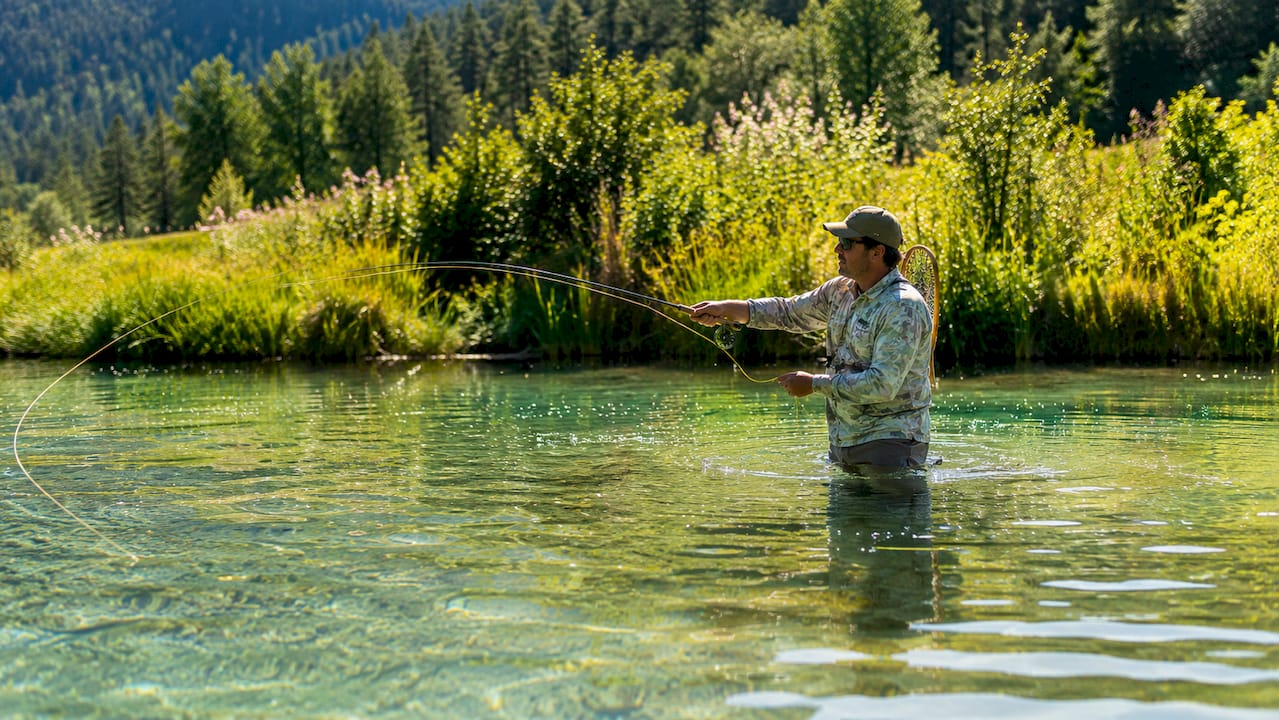
A camouflage fishing shirt is a performance garment engineered to blend anglers into waterside environments while delivering sun protection, moisture control, and freedom of movement that standard outdoor apparel cannot match. Unlike a basic tee or a hunting shirt pulled from the closet, a purpose-built camo fishing shirt treats UV exposure, heat management, and silhouette disruption as equal priorities. The best options carry a UPF 50+ rating, blocking over 97% of harmful UVA and UVB rays. That level of protection matters when you are standing in open water for six hours with no shade. Firstriseoutfitters builds fishing apparel around exactly this kind of early-morning, all-day commitment to the water.
What fabric technologies make a camouflage fishing shirt effective?
The fabric is the foundation of any good fishing shirt. Most technical fishing shirts use a polyester and spandex blend, typically 92–96% polyester with 4–8% spandex, to deliver four-way stretch and quick-dry performance. Polyester pulls moisture away from your skin and dries fast. Spandex adds the stretch you need when you are reaching back for a long cast.
UPF 50+ is the industry standard for sun-protective clothing. A shirt rated UPF 50+ blocks 97.5% of UV radiation, which means only a tiny fraction of the sun’s rays reach your skin. That is a meaningful difference from a standard cotton tee, which typically offers UPF 5 or less.
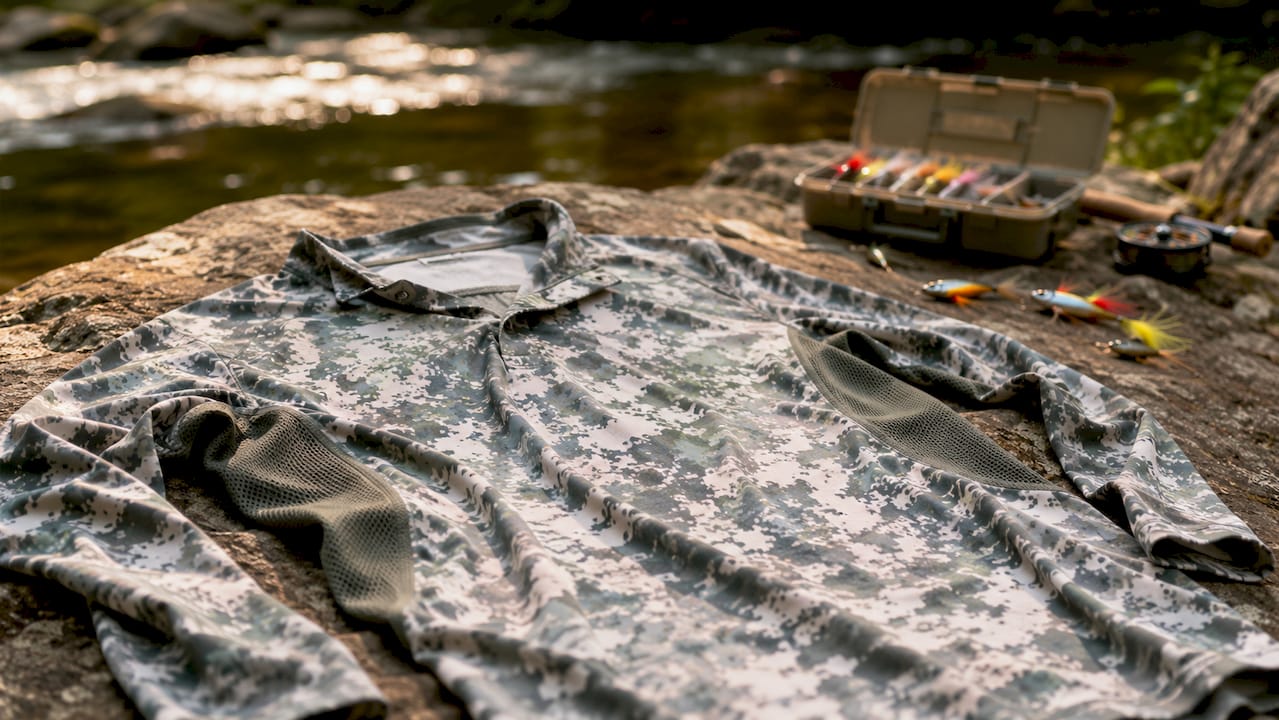
Mesh ventilation zones in the back panel or underarms are the detail most anglers overlook until they are sweating through a shirt at 10 AM. These panels create airflow where your body generates the most heat. On days above 80°F, that ventilation is the difference between staying focused and calling it early.
One of the biggest reasons casual anglers avoided synthetic fishing shirts for years was feel. Early polyester fabrics felt stiff and plasticky against the skin. Modern microfiber construction has closed that gap, delivering a soft touch that mimics cotton while retaining all the performance benefits. If you have written off synthetic shirts before, the newer fabrics are worth another look.
Pro Tip: Wash your fishing shirt inside out in cold water. Heat degrades the moisture-wicking finish over time, and turning it inside out protects the camo print from fading.
| Feature | What it does |
|---|---|
| UPF 50+ rating | Blocks 97.5% of UVA and UVB rays during prolonged sun exposure |
| Polyester/spandex blend | Provides four-way stretch and fast moisture evaporation |
| Mesh ventilation panels | Improves airflow in high-heat zones like the back and underarms |
| Microfiber construction | Delivers cotton-like softness without sacrificing performance |
How do camouflage patterns for fishing differ from hunting camo?
Most anglers assume any camo pattern works on the water. That assumption is wrong, and it costs them both comfort and concealment. Fishing camo patterns are built around a completely different visual environment than forest hunting camo.
Hunting camo uses dark, dense patterns designed to break up a human outline against tree bark, leaves, and shadow. Fishing environments are the opposite: open sky, bright reflective water, sandy banks, and bleached shoreline vegetation. Dark patterns absorb heat and stand out against light backgrounds. Light-toned camo reflects solar radiation better and blends into the bright, washed-out palette of a riverbank or coastal flat.
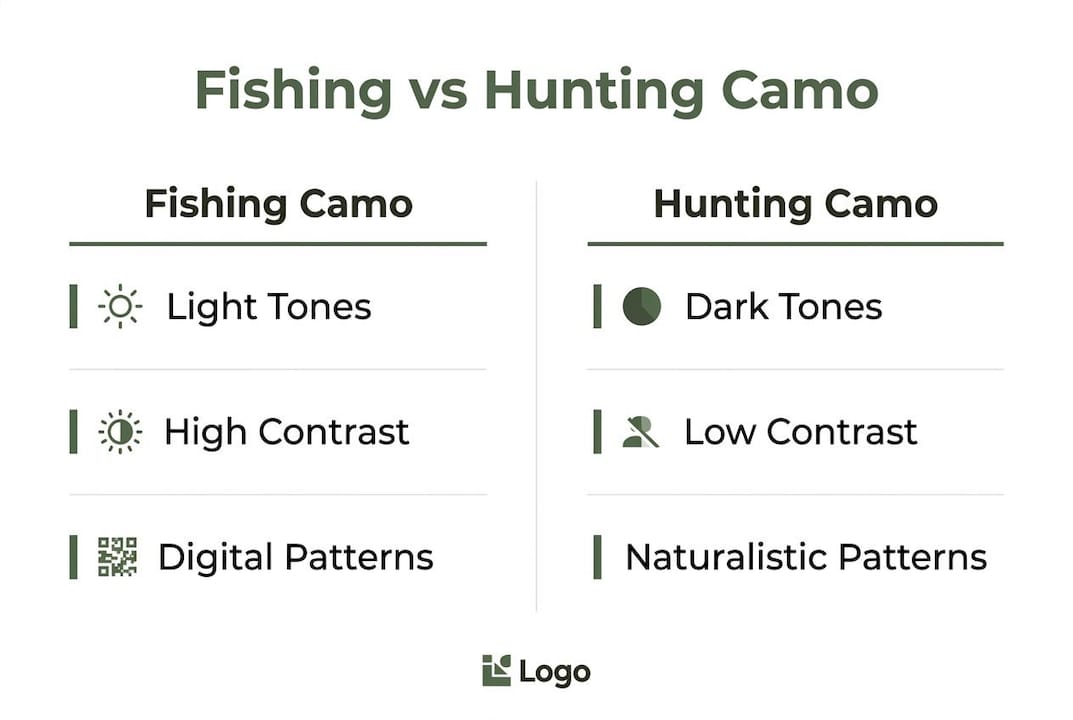
Digital and geometric overlays are the most effective pattern types for fishing. These designs disrupt your silhouette at 10–20 feet, which is the critical distance where fish detect movement above the waterline. Coastal camo patterns often incorporate blues, grays, and sandy tones. Freshwater patterns lean toward olive, tan, and light brown to match riparian vegetation.
The contrast strategy also differs. Hunting camo relies on low contrast to disappear into shadow. Fishing camo uses moderate contrast to break up the human outline against a bright, uniform background. Think of it like the difference between hiding in a dark room versus standing in front of a window. The tactics that work in one setting fail completely in the other.
| Environment | Pattern type | Color palette | Contrast strategy |
|---|---|---|---|
| Open water/coastal | Digital or geometric | Blues, grays, sandy tones | Moderate, light-toned |
| Freshwater/riparian | Geo or organic | Olive, tan, light brown | Moderate, earth-toned |
| Forest hunting | Dense organic | Dark greens, browns, black | Low, shadow-matching |
What features define the best fit and construction for active anglers?
Fit on a fishing shirt is not about looking sharp at the dock. It is about staying comfortable and unrestricted through a full day of casting, wading, and reeling. A well-fitting fishing shirt sits slightly loose in the torso for airflow but uses ergonomic sleeves that move with your arm rather than pulling against it.
Articulated sleeves are the single most underrated feature in fishing apparel. A standard shirt sleeve is cut flat. When you raise your arm to cast, it pulls the shirt up and restricts your shoulder. An articulated sleeve is pre-curved to match the natural position of your arm in motion. The result is a shirt that stays in place during casting without binding or riding up.
Here is what to look for when evaluating construction quality:
- Reinforced stitching at the shoulder seams and cuffs, where stress concentrates during casting
- Abrasion resistance on the forearms and chest, which contact rod guides and tackle
- Secure chest pockets with button or zipper closures to hold licenses, leaders, and small tools
- Integrated hood or neck gaiter for additional sun protection on exposed skin
- Flat seams against the skin to prevent chafing during long days on the water
Pro Tip: When sizing a fishing shirt, go up one size from your normal fit if you plan to layer underneath or wear a life jacket. The extra room prevents restriction without sacrificing the ergonomic sleeve benefit.
Durability matters more than most anglers expect when they first buy a fishing shirt. A shirt that pills, fades, or loses its moisture-wicking finish after ten washes is not a bargain at any price. Look for shirts with reinforced construction and colorfast camo prints. Check out fishing clothes built for early starts to understand what long-lasting construction actually looks like in practice.
How to choose the right camo fishing shirt for your conditions?
Choosing the right shirt comes down to matching the garment to your specific water, weather, and fishing style. Here is a practical framework for making that call.
-
Match the pattern to your environment. Coastal and saltwater anglers should choose light-toned geometric or digital patterns in blue, gray, and sand. Freshwater anglers on rivers and lakes do better with olive, tan, and brown earth-tone patterns that blend into bankside vegetation.
-
Choose fabric weight based on temperature. Lightweight polyester blends work best in warm weather above 70°F. For cooler mornings or fall fishing, look for slightly heavier microfiber constructions or shirts designed to layer over a base layer. Exploring fishing shirt options across different weight categories helps you build a year-round kit.
-
Decide between long sleeve and short sleeve. Long sleeve fishing shirts provide full arm coverage and UPF protection, which matters most during midday sun. Short sleeve options run cooler and work well for early morning or overcast days. Some shirts offer convertible sleeves that zip or roll up, giving you both options in one garment.
-
Consider integrated features based on your fishing style. Wading anglers who spend hours in direct sun benefit most from integrated facemasks and hooded designs. Boat anglers who move frequently may prioritize pocket placement and lightweight construction over full coverage.
-
Balance stealth with style. Not every fishing trip requires maximum concealment. If you fish in social settings, at tournaments, or in areas where you want to look put-together, a shirt with a subtle camo print reads as stylish outdoor apparel rather than full tactical gear. The Sunrise Lake Graphic Tee from Firstriseoutfitters is a good example of fishing apparel that works on the water and off it.
Key Takeaways
A camouflage fishing shirt works best when the pattern, fabric technology, and fit are matched to your specific fishing environment and conditions.
| Point | Details |
|---|---|
| UPF 50+ is non-negotiable | Blocks 97.5% of UV rays, protecting skin during full days of sun exposure. |
| Fishing camo differs from hunting camo | Light-toned, geometric patterns perform better against bright water and shorelines. |
| Fabric blend drives comfort | A 92–96% polyester and spandex blend delivers stretch, quick-dry, and moisture control. |
| Fit affects casting performance | Slightly loose torso and articulated sleeves prevent restriction during casting motion. |
| Match shirt to environment | Coastal anglers need blue-gray tones; freshwater anglers need olive and earth tones. |
Why I think most anglers are still buying the wrong fishing shirt
The conversation around fishing shirts has gotten more technical over the past few years, and that is mostly a good thing. But I have noticed a pattern: anglers obsess over UPF ratings and fabric specs while completely ignoring pattern selection. They grab whatever camo looks cool at the store and wonder why the fish are still spooking.
The research on light-toned patterns for water environments is clear. Dark forest camo absorbs heat and stands out against bright backgrounds. Yet the majority of fishing shirts I see on the water are still in dark, dense patterns borrowed from hunting. That is a real performance gap, and it is easy to fix once you know what to look for.
The other thing I keep coming back to is feel. The best technical shirt in the world does not help you if you hate wearing it. Modern microfiber blends have genuinely solved the comfort problem that kept casual anglers in cotton for so long. If your fishing shirt feels like a scratchy uniform, it is time to try something newer. The fabric technology has moved well past that.
Style matters too, and I do not think that is a shallow concern. A shirt you actually want to wear is a shirt you will put on at 4:30 AM without thinking twice. Firstriseoutfitters gets this right. Their apparel is built for people who are serious about the water but do not want to look like they raided a military surplus store. That balance is harder to strike than it sounds.
— Bobby
Fishing shirts worth wearing from Firstriseoutfitters
Firstriseoutfitters builds fishing apparel for anglers who take the water seriously but want to look good doing it. The collection includes shirts with muted, river-inspired tones and hand-designed trout artwork printed on garment-dyed Comfort Colors blanks.
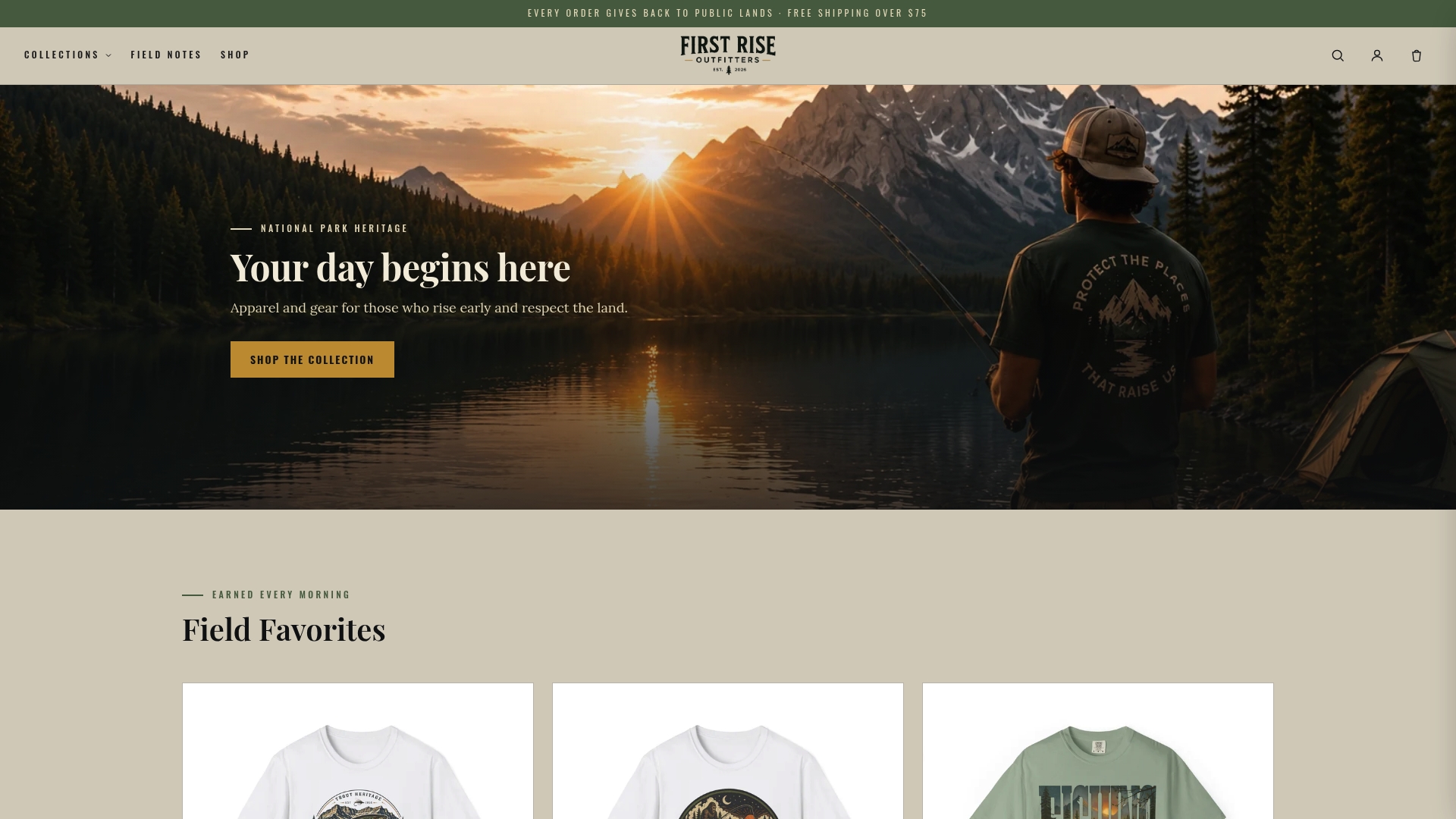
If you want a shirt that holds up from the first cast to the last light, the Fishing Definition Tee is a strong starting point. It combines the casual comfort of a well-made graphic tee with the kind of quality construction that survives a full season on the water. For anglers who want something with a vintage feel and trout-specific artwork, the Yellowstone River Co. Fishing Tee delivers exactly that. No loud logos, no tech-bro branding. Just well-made shirts that belong on a tailgate at 5 AM.
FAQ
What is a UPF 50+ rating on a fishing shirt?
UPF 50+ means the fabric blocks 97.5% of UVA and UVB radiation. It is the highest standard rating for sun-protective clothing and the benchmark to look for in any technical fishing shirt.
Do camouflage fishing shirts actually help you catch more fish?
Light-toned camo patterns disrupt your silhouette against bright water and shoreline backgrounds, reducing the chance that fish detect movement above the waterline. The effect is most noticeable in clear, shallow water where fish have a direct sightline to the surface.
What is the best sleeve length for a fishing shirt?
Long sleeve fishing shirts provide full UPF coverage and are the better choice for midday sun and open-water fishing. Short sleeve options work well for early morning, overcast days, or fishing in shaded environments.
How should a fishing shirt fit for casting?
A fishing shirt should sit slightly loose in the torso to allow airflow, with articulated sleeves that follow the natural curve of your arm. A shirt that pulls across the shoulders during a cast is too tight and will restrict your range of motion over a long day.
Can I wear a camo fishing shirt for activities other than fishing?
Yes. Camo fishing shirts with subtle patterns and earth-tone palettes work well for hiking, camping, and general outdoor use. The moisture-wicking and UPF features are equally useful in any sun-exposed, active environment.