
How to Fly Fish for Trout: A Beginner's Step-by-Step Guide
By Bobby Harris — Navy FMF Corpsman (2002–2010), founder of First Rise Outfitters
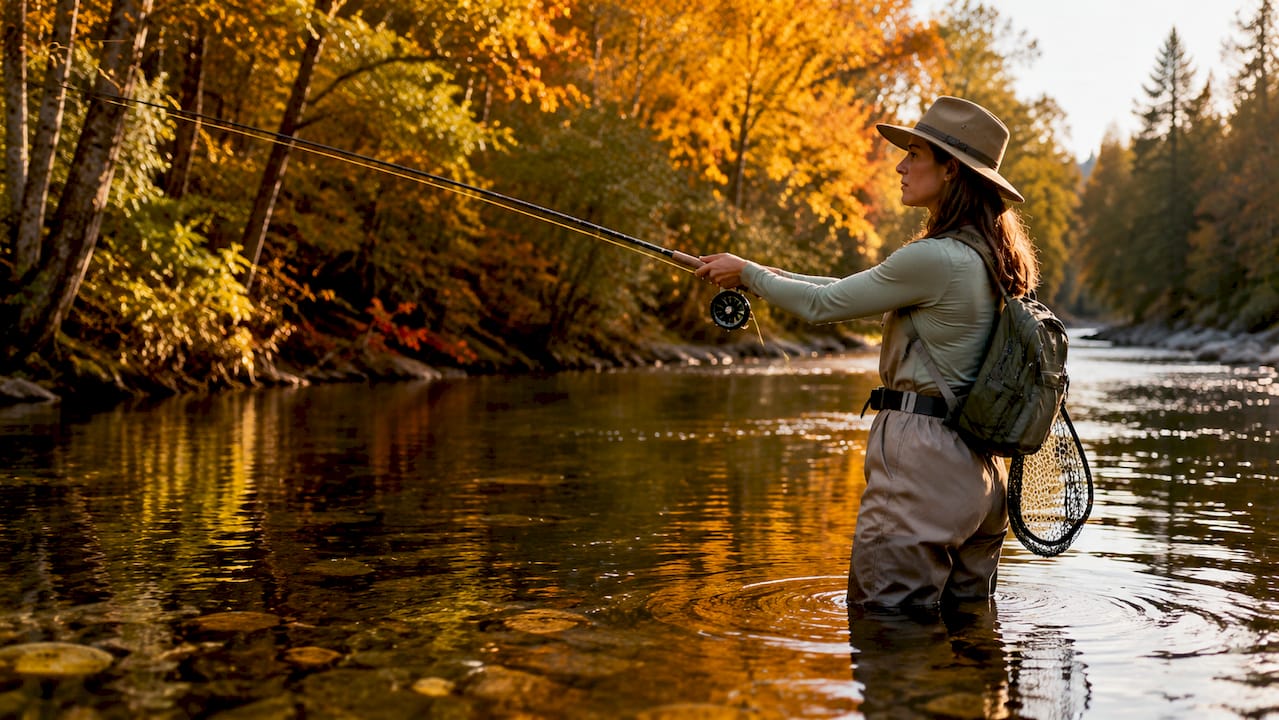
Fly fishing is defined as a method of angling where an artificial fly is cast using the weight of the line rather than the lure itself. That single distinction separates it from every other type of fishing and explains why the cast is the foundation of the whole sport. The good news: applying the right fly fishing tips for beginners cuts the learning curve dramatically. You do not need expensive gear or years of experience. You need a solid 9-foot, 5-weight rod, a basic understanding of casting mechanics, and the patience to read the water in front of you. Master those three things, and catching trout becomes a realistic goal on your very first outing.
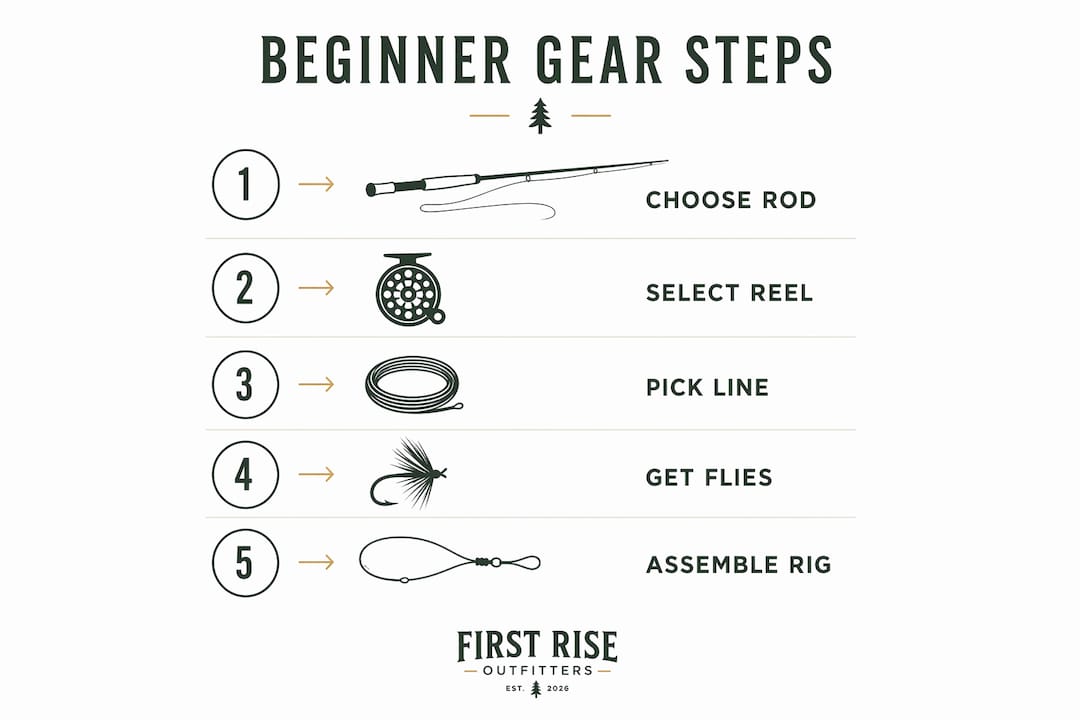
What beginner fly fishing gear do you need to get started?
A functional starter setup costs between $200 and $400, covering a rod, reel, and weight-forward floating line. That price range gets you everything you need to fish effectively. Spending more does not make you a better angler at this stage.
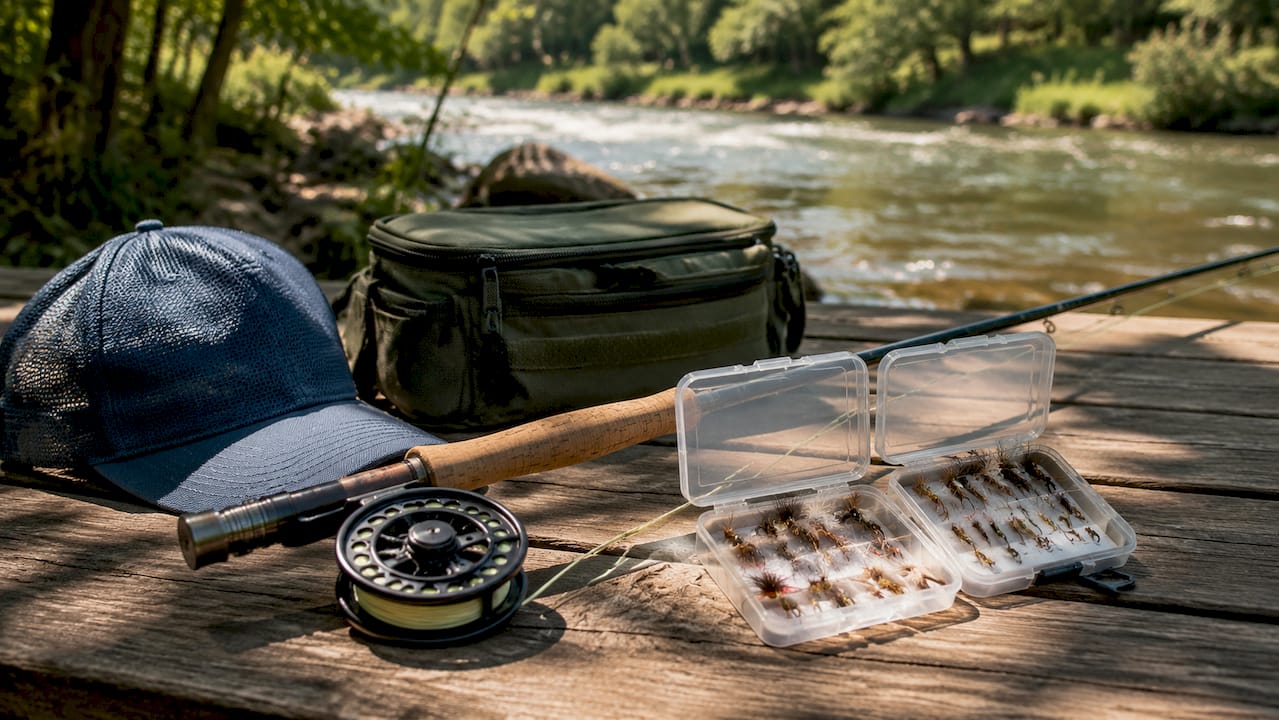
The 9-foot, 5-weight fly rod is the industry standard for trout fishing. It handles a wide range of stream sizes, fly sizes, and weather conditions. Think of it as the all-purpose pickup truck of fly rods. A matching reel and weight-forward floating line complete the core setup.
Beyond the rod and reel, you need a few accessories to get on the water:
- Leader and tippet: The leader is a tapered monofilament line that connects your fly line to your fly. Tippet is the thin section you tie the fly to. A 9-foot, 5X leader works for most trout situations.
- Nippers: Small clippers to trim knot tags. A $5 pair works as well as a $30 pair.
- Fly selection: Start with a small box of proven patterns. Elk Hair Caddis, Parachute Adams, Hare’s Ear Nymph, and Pheasant Tail Nymph cover most trout situations across the United States.
- Polarized sunglasses: These cut surface glare so you can actually see fish and structure below the water.
Should you buy a combo or separate components? Combo kits sold at fly shops bundle a rod, reel, line, and leader at a single price. For most beginners, a combo is the right call. You avoid the guesswork of matching components, and the quality at the $200–$400 price point is genuinely good. Check out this complete beginner’s guide from Firstriseoutfitters for a full breakdown of starter gear options.
| Gear item | Why you need it |
|---|---|
| 9-foot, 5-weight rod | All-purpose trout rod for streams and rivers |
| Matching reel | Holds line and provides drag when fighting fish |
| Weight-forward floating line | Easiest line to cast and control for beginners |
| 9-foot, 5X leader | Connects fly line to fly with natural presentation |
| Fly box with basic patterns | Covers dry fly and nymph situations |
Pro Tip: Buy your first setup from a local fly shop, not a big-box retailer. The staff will match your components correctly and often throw in a free casting demo.
How do you master the basic fly casting technique?
Most trout are caught within 20–40 feet, which means you do not need to cast far. A controlled 25-foot cast is all you need to start catching fish. Distance is a distraction for beginners. Accuracy is the skill that actually matters.
The overhead cast is the foundation of all fly casting. Break it into four steps:
- The pickup: Lift the rod smoothly from the 9 o’clock position to 12 o’clock, pulling the line off the water without splashing.
- The backcast: Drive the rod tip back to the 1 o’clock position and stop firmly. That abrupt stop loads the rod like a spring, sending the line behind you.
- The pause: Wait for the line to fully extend behind you. Rushing this step is the single most common beginner mistake.
- The forward cast: Drive the rod forward from 1 o’clock back to 10 o’clock and stop again. The line unloads and shoots forward toward your target.
The most common casting error is using your wrist instead of your forearm. Wrist overuse creates poor loop control and a tangled mess in the air. Imagine you are hammering a nail at eye level. That forearm motion is exactly what a good cast feels like.
Pro Tip: Practice on grass with a piece of yarn tied to your leader instead of a fly. Yarn is safe, visible, and lets you focus entirely on your casting form without worrying about hooks.
A two-hour professional casting lesson can accelerate your progress by weeks compared to self-teaching. A good instructor catches bad habits before they get locked in. Most fly shops offer lessons for $50–$75, and it is money well spent early on.
Which fly fishing techniques should beginners focus on first?
Nymphing is the most productive technique for beginners on most days, because it puts a fly where trout feed when nothing is showing on the surface. How much trout eat underwater changes with the season: in one study, land insects made up 68 to 77% of what stream salmonids ate in summer and about 1% in winter (Kawaguchi and Nakano, Freshwater Biology, 2001). Nymphing means fishing an artificial fly below the surface to imitate aquatic insects in their larval stage. You do not need to see a fish rising to catch one with a nymph. If terms like nymph, tippet, or mend are new, Fly Fishing Terms: 8 Words You'll Hear on the Water explains each one in plain language.
Here is how to approach the three core techniques:
- Nymphing: Attach a strike indicator (a small float) to your leader about twice the water depth above your fly. Add a small split shot weight above the fly to get it down. Cast upstream and let the fly drift naturally with the current. When the indicator pauses or dips, set the hook.
- Dry fly fishing: This is the most visual and exciting method. You cast a floating fly to a rising fish and watch it eat. It works best during a hatch, when insects are emerging and trout are actively feeding at the surface. Parachute Adams and Elk Hair Caddis are reliable starting patterns.
- Streamer fishing: A streamer is a larger fly that imitates a baitfish or sculpin. You cast across the current and strip the fly back in short, jerky pulls. This method works well in high or off-color water and often targets larger trout.
Reading water conditions determines which technique you choose. Clear, low water with rising fish calls for dry flies. Cloudy or fast water with no surface activity calls for nymphs or streamers. Matching your method to what the fish are actually doing is more important than any single fly pattern.
Pro Tip: Start every session with a nymph rig. If you see fish rising consistently, switch to a dry fly. This approach keeps you productive regardless of conditions.
How can beginners read water and find fish effectively?
Reading water is the skill that separates consistent anglers from frustrated ones. Trout are not randomly distributed in a river. They hold in specific spots that offer food, oxygen, and protection from predators. Learn those spots and you find fish.
The best places to look:
- Current seams: The line where fast water meets slow water. Trout sit in the slow side and dart into the fast side to grab food.
- Behind rocks and boulders: Rocks create a cushion of slow water downstream. Trout rest there and ambush insects drifting past.
- Undercut banks and overhangs: Shaded, protected spots where large trout hide during the day.
- Riffles: Shallow, fast, oxygenated water loaded with aquatic insects. Often overlooked by beginners, riffles are some of the most productive stretches on any river.
Observe the surface before you cast. Rising fish leave rings or splashes that tell you exactly where they are feeding. Insects hovering above the water signal an active hatch. Birds diving at the surface often indicate a feeding frenzy below.
Moving strategically to cover more water produces more fish than standing in one spot. If a run does not produce after 10–15 minutes of good drifts, move upstream and try the next likely holding spot. Finding fish matters more than perfecting your fly choice.
Pro Tip: Wade quietly and stay low. Trout spook easily from vibration and shadow. Approach each run from downstream, move slowly, and cast before you wade into the best water.
What common mistakes should beginners avoid in fly fishing?
Most beginner frustration comes from a handful of repeatable mistakes. Recognizing them early saves you hours of confusion on the water.
- Over-mending the line: Mending means flipping the fly line upstream to slow the drift of your fly. Over-mending lifts the fly unnaturally off the bottom and ruins the presentation. At short distances, a small lift of the rod tip is all you need.
- Muscling the cast with your wrist: This collapses your casting loop and sends the line crashing down. Use your forearm, not your wrist.
- Rushing the backcast: Not waiting for the line to fully extend behind you causes the line to crack like a whip and break off your fly. Pause. Count to one. Then cast forward.
- Ignoring water reading: Casting into random water with no strategy produces random results. Identify likely holding spots before you make your first cast.
- Skipping land practice: Most beginners go straight to the river before they can cast. Thirty minutes of lawn casting with yarn builds the muscle memory that makes river fishing productive from day one.
Fly fishing is simple problem-solving at its core. Smooth casting, the right fly, and a natural drift are the three variables that matter. Fix your mistakes one at a time and the results follow.
Key Takeaways
Fly fishing success for beginners comes down to three things: a solid starter setup, accurate short-range casting, and reading the water to find where trout actually hold.
| Point | Details |
|---|---|
| Start with the right gear | A $200–$400 combo with a 9-foot, 5-weight rod covers all beginner trout situations. |
| Cast short and accurate | Most trout are caught within 40 feet; a controlled 25-foot cast beats long-distance every time. |
| Nymph first, dry fly second | Nymphs fish where trout feed when nothing is rising, so nymphing produces the most consistent results. |
| Read the water before casting | Current seams, behind rocks, and riffles hold the most fish on any river. |
| Fix one mistake at a time | Over-mending, wrist casting, and rushing the backcast are the three errors that cost beginners the most fish. |
What I’ve learned from watching beginners on the water
The biggest thing I’ve noticed is that most beginners think gear is the problem. They assume a better rod or a more expensive fly will fix a slow day. It almost never does. The anglers who improve fastest are the ones who spend time watching the water before they ever pick up a rod.
Reading the river is a skill that costs nothing and pays off immediately. I’ve watched beginners with $150 combo rods out-fish experienced anglers with premium setups simply because they identified where the fish were holding and presented a fly naturally. That is the whole game.
The other thing I’d tell every new angler: embrace the bad casts. A tangled leader or a spooked fish is information. It tells you something about your timing, your approach, or your fly choice. The anglers who get frustrated and quit are the ones who treat mistakes as failures. The ones who stick with it treat every mistake as a data point.
Find a local fly fishing club or a guide for even one day on the water. The mentorship shortcut is real. You will learn more in four hours with an experienced angler than in four weekends alone. The fly fishing community in the United States is genuinely welcoming to beginners. Use that.
— Bobby
Gear up and get on the water with Firstriseoutfitters
You’ve got the knowledge. Now you need the right kit to go with it.
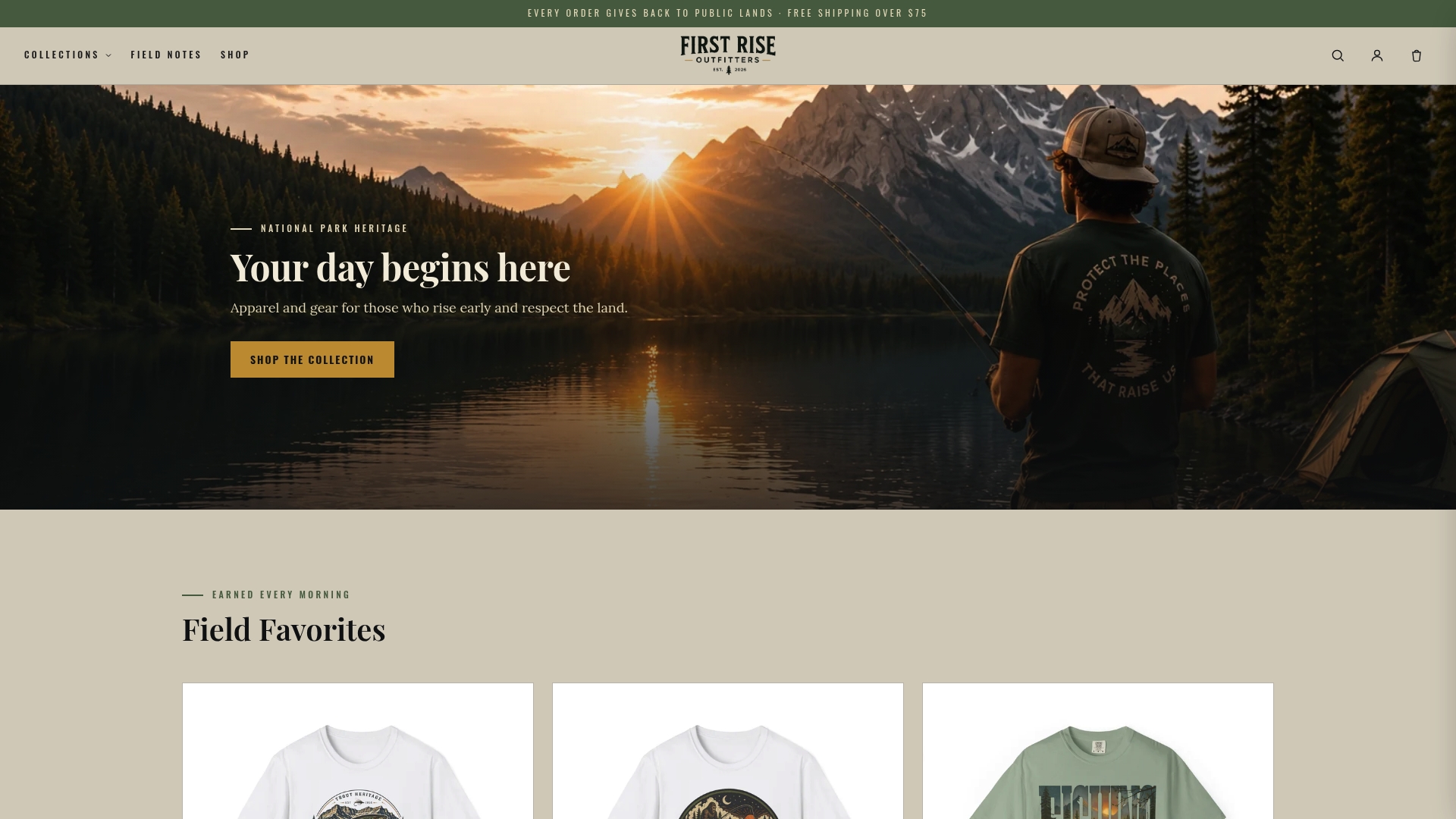
Firstriseoutfitters makes fishing apparel built for anglers who are on the water at first light. The badge tee series features hand-designed artwork of brook, brown, rainbow, and cutthroat trout printed on garment-dyed Comfort Colors blanks in muted, river-inspired tones. These are shirts that belong on a tailgate at 5 AM, not in a mall. Whether you’re shopping for yourself or looking for a gift for the angler in your life, the Fishing Definition Tee is a solid starting point. For something with a little more regional character, the Brook Trout Angler Tee captures the feel of native waters perfectly.
FAQ
What gear does a beginner need to start fly fishing?
A 9-foot, 5-weight rod, matching reel, weight-forward floating line, a 9-foot leader, and a small selection of nymphs and dry flies covers everything you need. A functional setup costs between $200 and $400.
How far do you need to cast to catch trout?
Most trout are caught within 20–40 feet of the angler. A controlled, accurate 25-foot cast is more productive than a long, sloppy one.
What is the best fly fishing technique for beginners?
Nymphing is the most productive technique for beginners because it puts a fly where trout feed when nothing is rising on the surface. Use a strike indicator and a weighted nymph pattern like a Hare’s Ear or Pheasant Tail.
How do you practice fly casting without going to a river?
Tie a piece of yarn to your leader and practice on a grassy lawn. This method is safe, free, and lets you build casting muscle memory without the distraction of water or fish.
How do you find trout in a river?
Look for current seams where fast water meets slow water, the slack water behind rocks, undercut banks, and shallow riffles. If you do not find fish in one spot after 10–15 minutes, move upstream to the next likely holding area.