
Wet Wading Clothing: Garment-Dyed Tees for Anglers
By Bobby Harris — Navy FMF Corpsman (2002–2010), founder of First Rise Outfitters
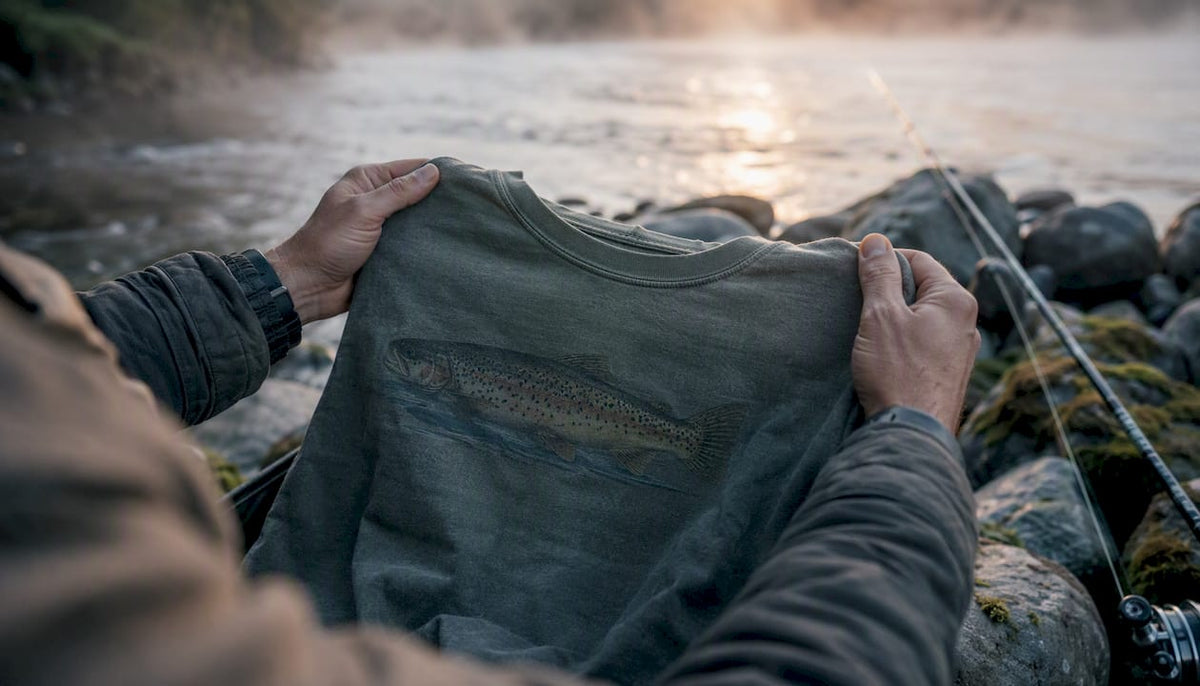
For this guide, “wet wading clothing” means garment-dyed, trout- and river-themed casual tees and apparel — the kind of shirt you pull on at 4:45 AM before you even think about your rod. If you’re shopping for technical quick-dry wading pants or neoprene socks, this isn’t that article. Here, the recommendation is simple: Firstriseoutfitters builds exactly this style of shirt on Comfort Colors and other quality blanks, and before you wear yours for the first time, wash it separately. Iowa State University Extension explains why that first wash matters more than most buyers realize.
Key Takeaways
Garment-dyed, trout-themed tees deliver their best look and longest life when you choose the right blank, confirm the print method, and wash separately before the first wear.
| Point | Details |
|---|---|
| What “wet wading clothing” means here | Garment-dyed, trout- and river-themed casual tees — not technical wading gear. |
| Single best buying rule | Check blank brand, fabric weight, dye process, and print type before purchasing. |
| First-wash step to prevent crocking | Wash separately in cold water, check wash water color, and repeat if dye runs. |
| Comfort Colors 1717 specs | —, 100% ring-spun cotton, garment-dyed, relaxed fit — the benchmark blank for this style. |
| Where to shop | Firstriseoutfitters carries garment-dyed trout tees on Comfort Colors, Bella+Canvas, and Gildan blanks with full product details listed. |
Table of Contents
- What does “wet wading clothing” mean for anglers shopping casual tees?
- Why anglers love garment-dyed, river-themed tees
- How to choose the right garment-dyed shirt: a practical checklist
- How to care for garment-dyed tees and prevent dye transfer
- What product details should you check before buying?
- The part most buyers skip (and why it costs them)
- Firstriseoutfitters makes the shirts this article describes
- Sources
What does “wet wading clothing” mean for anglers shopping casual tees?
This article uses the term in a specific way, so here’s what’s in and what’s out:
- Garment-dyed blanks: The shirt is dyed after it’s fully sewn, producing a soft, broken-in hand and natural tonal variation from piece to piece.
- Trout and river artwork: Species-specific graphics — brook, brown, rainbow, cutthroat — or river and National Park themes printed in muted, nature-inspired tones.
- Muted palette: No neon. Colors read like river stones, morning fog, and old maps.
- Casual, relaxed fit: Made for tailgates, coffee shops, and cool mornings on the bank, not for performance wading.
- Audience: Early-rising anglers, hikers, and gift buyers who want a vintage, lived-in shirt that signals where they’d rather be.
This article does not cover technical wading gear, quick-dry performance layers, wading boots, or waterproof fishing clothing designed for in-stream use. That’s a different category with a different buyer.
Why anglers love garment-dyed, river-themed tees
The appeal is immediate: these shirts feel worn-in from the first time you put them on. Garment-dyeing happens after the tee is fully constructed, which creates a softer hand, subtle color variation across the fabric, and that vintage look that pre-washed blanks simply can’t replicate. For anglers, that aesthetic fits naturally — it matches the worn waders, the scratched reel, the truck with 200,000 miles on it.
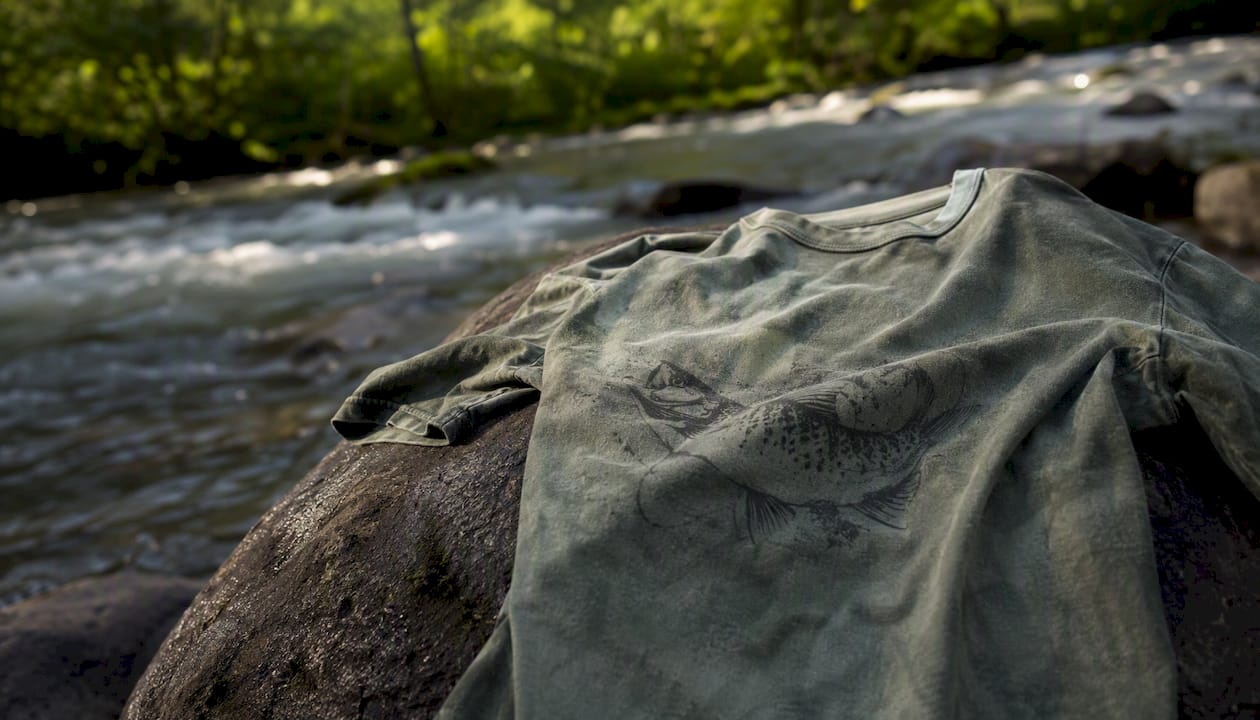
The muted tones also make practical sense on the water. Dusty blues, faded olives, and washed-out tans don’t spook fish the way a bright white shirt does at dawn. You’re not wearing camo, but you’re not wearing a billboard either.
Print method matters just as much as the blank. A thick plastisol print defeats the vintage hand entirely — it sits on top of the fabric like a sticker and cracks over time. Water-based, discharge, or soft-hand inks sink into the weave and age with the shirt. The artwork stays part of the fabric rather than sitting on top of it.
Pro Tip: When you’re evaluating a garment-dyed tee online, look for the words “water-based” or “discharge” in the print description. If the listing only says “screen printed” with no ink type specified, ask before you buy — a glossy plastisol print on a Comfort Colors blank is a mismatch that shows up after three washes.
How to choose the right garment-dyed shirt: a practical checklist
The single most important rule: check the blank brand, dye process, print type, and care label before you add anything to your cart. Those four details predict how the shirt will look and feel after a year of wear.
Here’s what to look for on any product page:
- Blank brand: Comfort Colors, Bella+Canvas, and Gildan are the three names worth trusting for this style. Each has a different weight and hand — more on specs below.
- Fabric weight: Target a heavyweight vintage feel for the fabric weight. Lighter blanks (4–4.5 oz) are fine for warm-weather wear but won’t have the same substantial hand.
- Fiber content: 100% ring-spun cotton gives the softest feel and takes garment-dye best. Blends can work, but they dye unevenly and may look patchy.
- Dye process: Look for “garment-dyed” or “pigment-dyed” explicitly stated. “Washed” alone is not the same thing.
- Print type: Water-based, discharge, or soft-hand plastisol. Avoid standard heavy plastisol on garment-dyed shirts.
- Preshrunk: Garment-dyed tees are typically preshrunk during the dye process, but confirm it on the product page.
- Care instructions: A product page with no care label guidance is a red flag. You need to know wash temperature and whether tumble drying is safe.
For fit, anglers generally do well with a relaxed cut. You’ll often layer a light fleece underneath on cool mornings, and a slim-fit tee makes that uncomfortable. If the listing shows a size chart with chest and length measurements, use it — don’t just go by your usual size, since garment-dyed blanks can vary slightly by colorway due to the dye process itself.
How to care for garment-dyed tees and prevent dye transfer
The single most effective first action is this: wash your new garment-dyed tee separately before you wear it anywhere near light-colored gear.
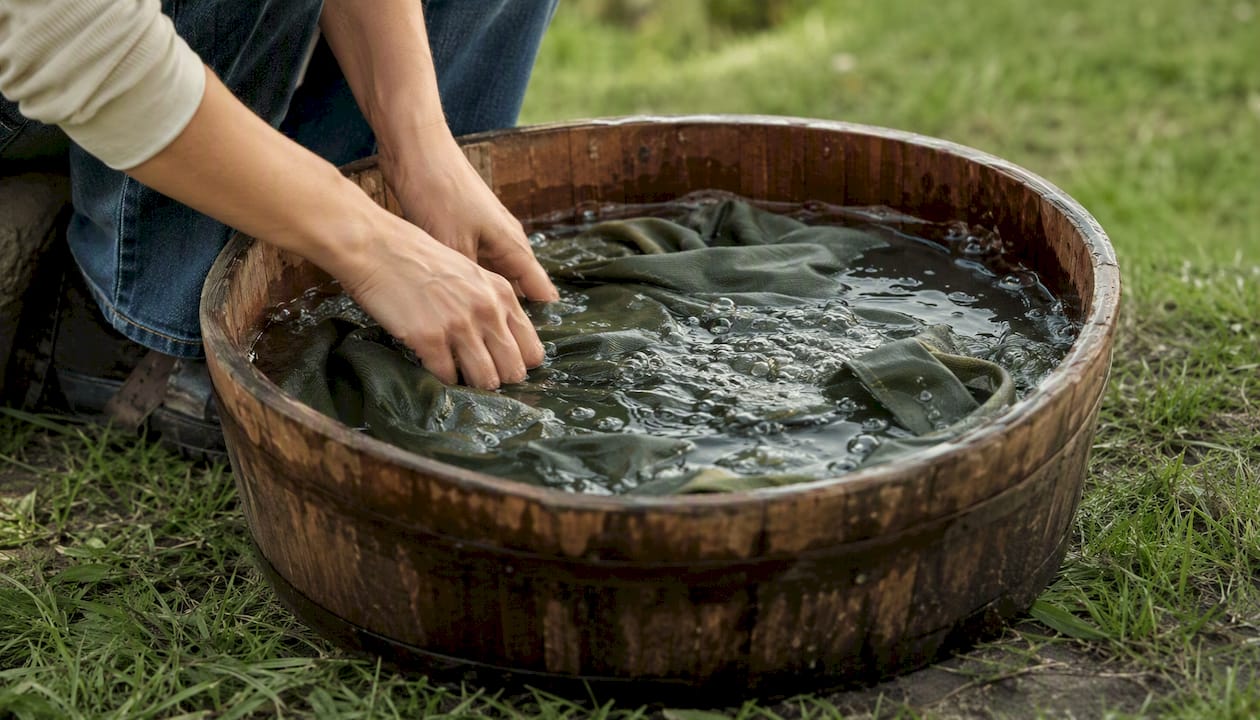
Iowa State University Extension explains that crocking — the transfer of surface dye to other fabrics — happens when excess dye wasn’t fully rinsed during manufacturing. It’s a set/adhesion issue, not random bad luck, and the fix is managing that surface dye early.
First-wash steps:
- Turn the shirt inside out.
- Wash alone or with similarly dark colors — never with white or light gear.
- Use cold water and a gentle cycle.
- Check the wash water after the cycle. If it runs deeply colored, run a second wash before wearing.
- Follow the care tag exactly — some blanks specify warm water for the first wash to help release excess dye.
- Air dry or tumble dry low; high heat can set any remaining surface dye unevenly.
For ongoing care, wash like colors together and avoid hot water, which accelerates fading and can cause bleeding onto lighter items in the same load.
When crocking is a persistent concern, commercial dye fixatives are worth considering. Iowa State Extension specifically names Retayne and Rit ColorStay as options for cotton fabrics. One important limitation: Retayne requires sufficient water volume and high temperature to work correctly, and it may not function properly in front-loading machines with low water levels. Always read the product instructions before use.
Iowa State University Extension on crocking: “Crocking is the transfer of dye from the surface of a dyed or printed fabric onto another surface by rubbing. It can be caused by poor dye penetration or fixation, improper washing, or excess dye left on the surface of the fabric.” The recommended approach is to wash separately first, monitor the wash water, and use a commercial fixative like Retayne or Rit ColorStay when the fabric and machine allow it.
A quick home test: rub a damp white cloth firmly over the inside of the shirt. If color transfers, the shirt needs another wash before it’s ready to pair with light-colored gear.
One thing Iowa State Extension is clear about: vinegar and salt are not reliable long-term dye fixatives for cotton, despite being widely recommended online. They may help slightly in the short term, but they don’t chemically bond dye to fiber the way a commercial fixative does.
What product details should you check before buying?
The detail that best predicts long-term satisfaction is a clear combination of blank name, fabric weight, and care instructions on the product page. If any of those three are missing, you’re guessing.
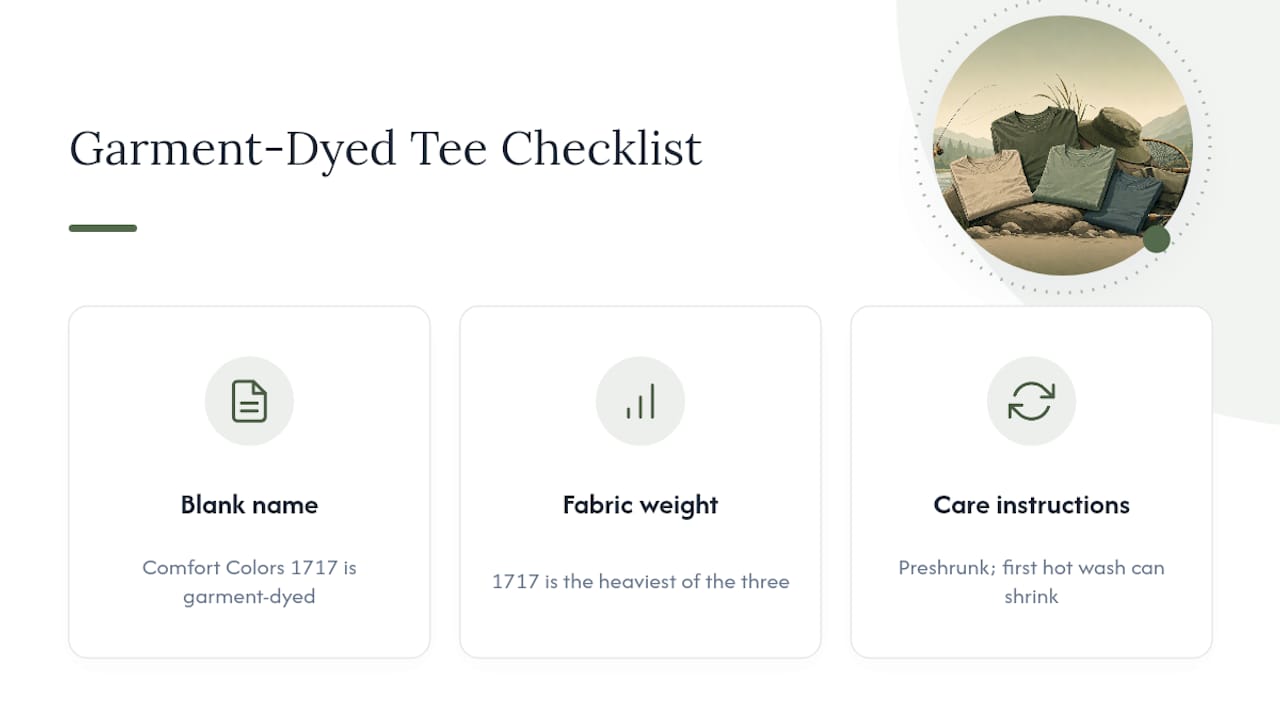
Here are the specs for the blanks Firstriseoutfitters uses, drawn from manufacturer data:
The Comfort Colors 1717 is the heaviest of the three and the only one that’s genuinely garment-dyed, which means inherent shade variation from shirt to shirt is expected and intentional. If you order two of the same color, they may look slightly different — that’s the point.
For sizing, measure your chest at the widest point and compare it to the size chart’s chest measurement, not the general size label. Garment-dyed tees are typically preshrunk, but a first hot wash can still cause minor shrinkage, so when in doubt, size up.
Gift buyers: If you’re unsure between two sizes, go larger. A relaxed-fit tee that runs slightly big is far more wearable than one that’s too snug, and most anglers prefer a little room for layering anyway. Check the fishing apparel guide for women if you’re shopping for a female angler — fit guidance differs.
The part most buyers skip (and why it costs them)
Most people buying a garment-dyed tee spend their time on the design and zero time on the blank or the print method. That’s backwards. The design is what catches your eye, but the blank and print are what you’re still wearing three years from now.
A Comfort Colors 1717 with a water-based print ages beautifully. The color softens, the print integrates with the fabric, and the shirt looks better at year three than it did on day one. A cheaper blank with a thick plastisol print does the opposite — the print cracks, the fabric pills, and the shirt ends up in the donation pile by summer’s end.
The same logic applies to care. Buyers who skip the first separate wash and immediately throw a new garment-dyed tee in with their light-colored gear are the ones who end up with pink socks and a faded print. Iowa State Extension’s guidance on crocking isn’t complicated, but it does require one extra step upfront.
If you’re shopping for early-morning fishing apparel, the blank and print method deserve as much attention as the artwork. The best river-themed tee is the one that still looks like itself after a hundred washes.
Firstriseoutfitters makes the shirts this article describes
Firstriseoutfitters builds its core line on Comfort Colors 1717, Bella+Canvas 3001, and Gildan blanks — the exact names worth trusting from the checklist above. Every product page lists the blank brand, dye process, and care instructions, so you’re never guessing about what you’re buying.
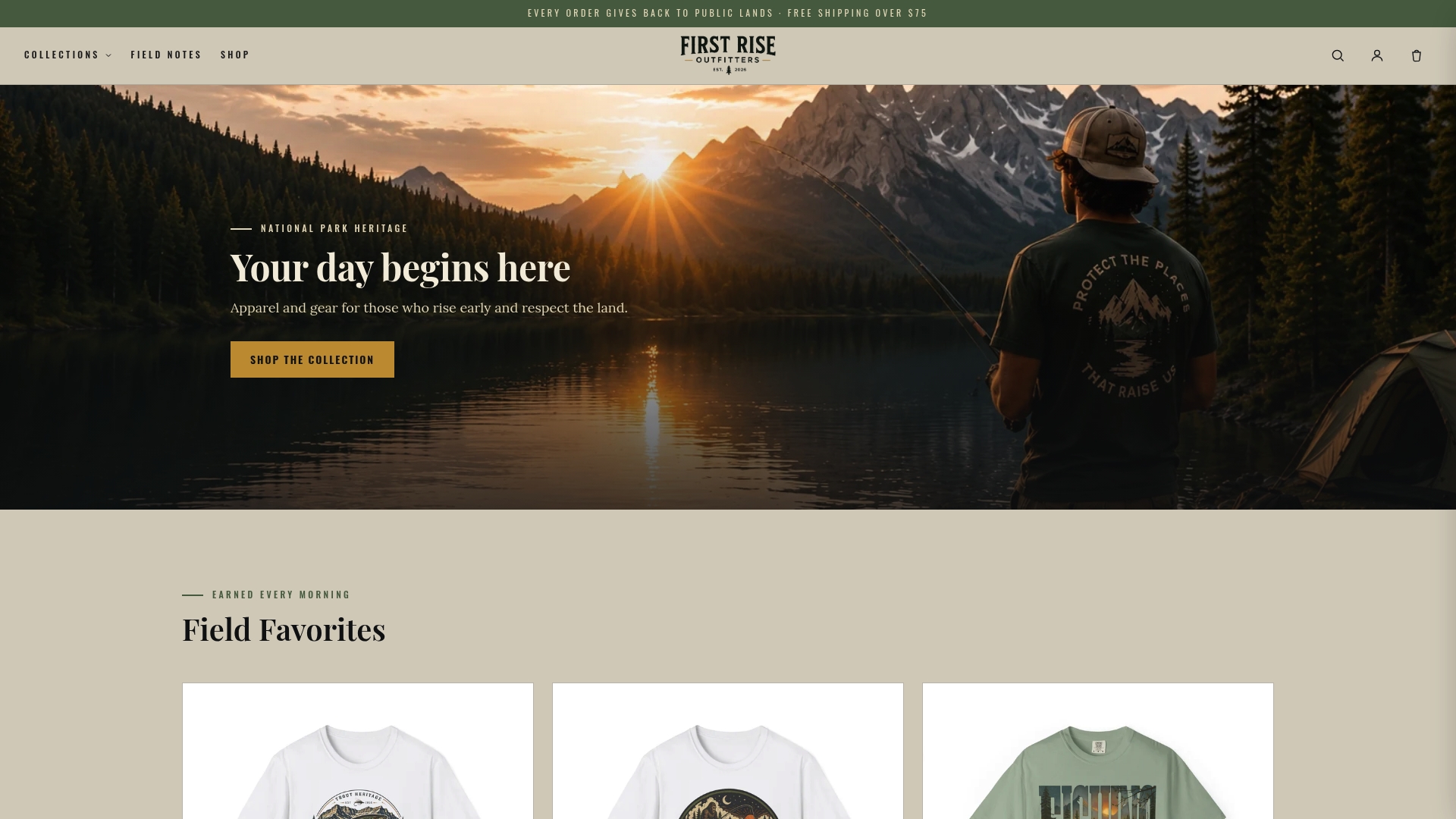
The Trout Heritage collection covers brook, brown, rainbow, and cutthroat species in muted, river-inspired tones with hand-designed artwork. The Brook Trout Fishing T-Shirt and the Yellowstone River Co. tee are two strong starting points if you want to see exactly what garment-dyed, species-specific artwork looks like on a quality blank. Author Bobby reviews product specs and care guidance directly on the blog, and product photos show the actual garment-dyed color variation you should expect. Browse the Trout Heritage collection and check the size chart before you order.
Sources
- Preventing Color Transfer by Bleeding or Crocking • AnswerLine • Iowa State University Extension and Outreach
- The Retro Washed T-Shirt: A Sourcing Guide for Brands & Buyers - Fexwear
- Custom Vintage T-Shirts: How to Get the Garment-Dyed Look | Merchpath
- Why Christian Brands Choose the Comfort Colors 1717 | BlankScout
Recommended
- Best Trout Fishing T-Shirts for Anglers in the US – First Rise Outfitters
- Rocky Mountain Fishing Shirt, Colorado Fly Fishing Tee, Vintage Trout – First Rise Outfitters
- Brook Trout Fishing T-Shirt | Vintage Native Waters Angler Tee – First Rise Outfitters
- Fishing Clothes for Women: Style Meets Function – First Rise Outfitters