
Campfire Outfit Ideas for Anglers Who Rise Early
By Bobby Harris — Navy FMF Corpsman (2002–2010), founder of First Rise Outfitters

Three ready-to-wear campfire outfit formulas work for most dawn fishing conditions: badge tee + light layer + shell for mild summer mornings, badge tee + flannel + insulated vest for cool spring and fall, and merino base + badge tee + parka for cold or damp starts. Each formula builds on a Firstriseoutfitters badge tee printed on a garment-dyed Comfort Colors blank or a Bella+Canvas 3001 as the foundation layer.
- Formula 1 (mild summer dawn): Firstriseoutfitters badge tee, lightweight zip fleece, packable wind shell, quick-dry pants, trail runners. Best for mild summer mornings with low dew.
- Formula 2 (cool spring/fall): Firstriseoutfitters badge tee, midweight flannel, insulated vest, wool-blend pants, waterproof boots. Best for cool spring or fall mornings with variable wind.
- Formula 3 (cold/damp): Merino base layer, Firstriseoutfitters badge tee, synthetic parka, waterproof bib, insulated boots. Best for cold or damp mornings or light rain.
For a pure dawn fishing session where you’ll be moving to the water, Formula 1 or 2 keeps you mobile. If you’re spending real time at the fire before you cast, Formula 3 gives you the warmth to sit still without shivering.
Key Takeaways
The most reliable campfire outfit for dawn anglers is a badge tee anchor layer, a weather-matched mid layer, and a waterproof shell — with wool or synthetic socks and grippy waterproof boots completing the kit.
| Point | Details |
|---|---|
| Skip cotton as a base | Cotton holds moisture and chills you fast; use merino or synthetic next to skin. |
| Layer for movement, not the fire | Dress for the walk to the water and add insulation once you’re sitting still. |
| Waterproof boots matter most | Grippy, waterproof footwear with wool socks is the highest-impact cold-morning purchase. |
| Keep synthetics back from flames | Loose synthetic fabrics can melt or ignite near sparks; prefer tighter-woven layers at the fire. |
| Firstriseoutfitters badge tees | Garment-dyed Comfort Colors and Bella+Canvas 3001 blanks layer cleanly and hold color through repeated cold-water washes. |
Table of Contents
- How should you layer for a dawn campfire and early-morning fishing?
- What should you wear for each condition at the campfire?
- What footwear and socks hold up in wet, muddy conditions?
- What accessories should you bring, and how do you stay safe near a campfire?
- How do you pack and care for garment-dyed tees after a campfire outing?
- Why Firstriseoutfitters badge tees work well for campfire and fishing outfits
- A note from Bobby on fishing-first style
- The right badge tee is the easiest place to start
- Sources
How should you layer for a dawn campfire and early-morning fishing?
The three-layer system — moisture-managing base, insulating mid, wind-resistant outer — is the most reliable approach for dawn anglers. It works because each layer has one job, and you can add or shed pieces as your body temperature changes.
Base layer: merino wool or a synthetic like polyester. Both wick sweat away from your skin and dry quickly. Cotton does neither. A wet cotton tee against your skin at 5 AM on a cold morning will drain your warmth faster than the air temperature alone. Avoid cotton next to the skin and treat it as a campfire-only option, not a fishing layer.
Mid layer: fleece, down, or synthetic insulation. Fleece breathes well and stays warm even when damp. Down packs smaller but loses insulation when wet. Synthetic fill splits the difference — it insulates when damp and dries faster than down. For fishing in drizzle or heavy dew, synthetic is the safer call.
Outer shell: waterproof or at minimum water-resistant, with wind protection. Insulation, waterproofing, wind protection, and mobility are the primary factors when choosing outerwear for cold-weather angling.
The activity-driven rule is simple: dress for the walk out to the water, not for sitting at the fire. You’ll warm up moving through brush or wading to your spot. If you leave camp already sweating, you’ll be cold within 20 minutes of stopping. Vent your shell, open your mid-layer zip, and let heat escape before it builds up.
Pro Tip: Pack one spare pair of gloves and one spare pair of socks in a zip-lock bag at the bottom of your pack. Wet hands and feet end mornings early — a dry backup costs almost nothing.
What should you wear for each condition at the campfire?
Your outfit formula shifts with the morning’s temperature, wind, and moisture. Here’s how to build each one.
Mild summer dawn (55–65°F)
A Firstriseoutfitters badge tee on a Comfort Colors garment-dyed blank is soft enough to wear directly against skin and muted enough to blend into a riverbank at first light. Add a lightweight zip fleece for the walk out, a packable wind shell for the water, and quick-dry pants. Polyester blends and technical fabrics wick moisture and dry much faster than cotton, which matters when morning dew soaks your legs wading through tall grass.
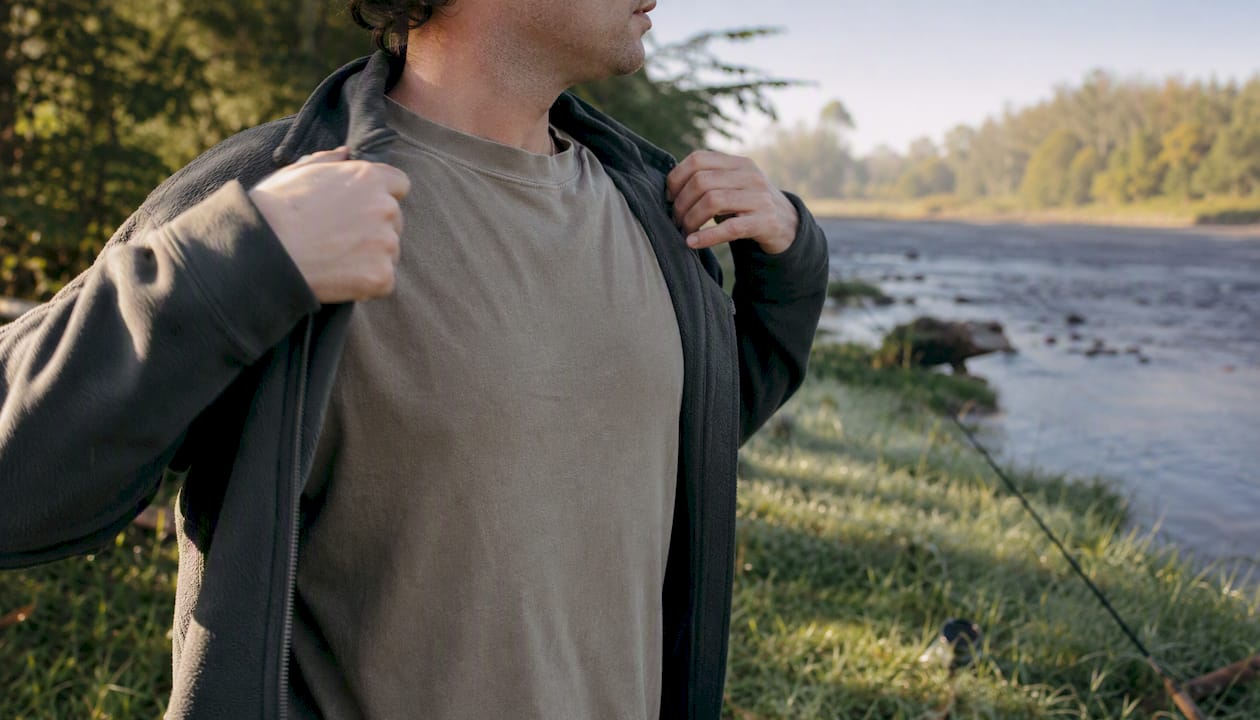
Accessories: a baseball cap for sun and a buff or neck gaiter for the pre-dawn chill.
Cool spring/fall dawn (40–55°F)
Badge tee as the mid-layer anchor, a midweight flannel over it, and an insulated vest on top. The vest keeps your core warm without restricting your casting arm. Wool-blend pants hold warmth better than standard cotton denim when the air is damp. Waterproof boots are non-negotiable at this temperature range — cold wet feet shut down a morning fast.
Accessories: a wool beanie, liner gloves, and a headlamp for the pre-dawn walk.
Cold or damp mornings (below 40°F or light rain)
| Layer | Recommended type | Temperature range |
|---|---|---|
| Base | Merino or synthetic | Below 40°F |
| Mid | Synthetic insulated jacket | 40–55°F |
| Outer shell | Waterproof, taped seams | Any rain/wind |
| Pants | Waterproof bib | Below 40°F or wet |
For heavy-use conditions, Frogg Toggs recommends a minimum 10,000 mm waterproof rating and 10,000 g/m² breathability for outerwear that holds up through a full morning on the water. A shell that breathes poorly will trap sweat and leave you just as cold as no shell at all.
For sitting at the fire versus moving to fish: at the fire, pile on the insulation. When you move to cast, shed the outer parka and rely on your mid layer for mobility. Check out fishing clothes that work before sunrise for more condition-specific picks.
What footwear and socks hold up in wet, muddy conditions?
Waterproof, grippy boots plus moisture-wicking wool or synthetic socks are the single highest-impact purchase for dawn anglers. Everything else you can adjust mid-morning. Cold, wet feet are harder to fix once you’re at the water.
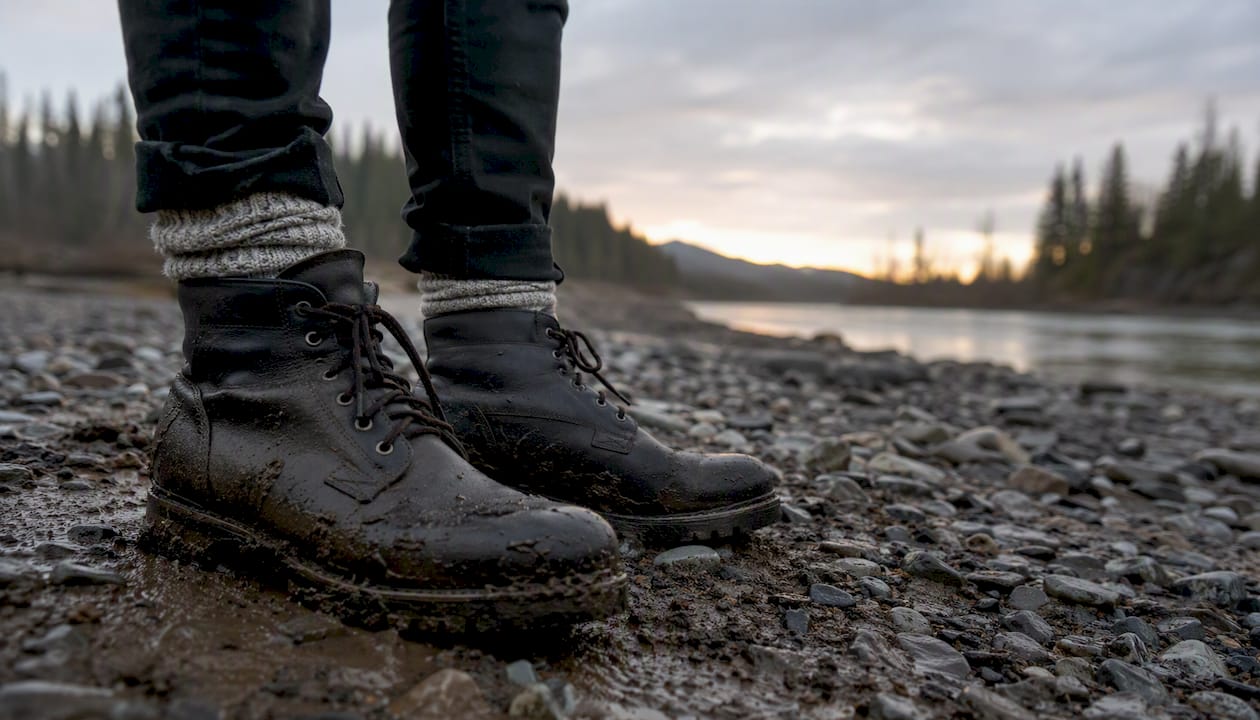
Look for boots with a waterproof membrane (Gore-Tex or equivalent), a lug sole for mud and wet rock, and enough room in the toe box that your toes can move. Tight boots restrict circulation, which speeds up heat loss — a boot that fits perfectly in the store may feel constricting once you add a thick wool sock. Size up half a size when buying for cold-weather use.
For traction on icy banks or slick rocks, removable ice cleats (like Yaktrax or similar) slip over most boot soles and add grip without requiring a separate pair of boots. Keep them in your pack and clip them on when the bank looks sketchy.
Pro Tip: Keep a spare pair of dry wool socks in a waterproof bag inside your pack. Swap them at midmorning if your feet feel damp — it resets your comfort level for the rest of the outing. Disposable toe warmers tucked into your boots add 2–3 hours of warmth on the coldest mornings.
For outdoor accessories that complement your footwear setup, a compact camp stool keeps you off cold, wet ground while you change socks or wait for the hatch.
What accessories should you bring, and how do you stay safe near a campfire?
Bring a warm hat, a neck gaiter, a headlamp, a compact blanket, and spare gloves. Those five items cover most dawn contingencies — sudden temperature drops, a longer-than-planned sit at the fire, or a pre-dawn walk in the dark.
- Wool or fleece beanie: covers ears and holds warmth even when damp.
- Neck gaiter: doubles as a face cover in wind or a light balaclava in cold.
- Headlamp: hands-free light for rigging, walking to the water, and camp tasks.
- Compact emergency blanket or packable down throw: weighs almost nothing, adds significant warmth at the fire.
- Liner gloves: thin enough to tie knots, warm enough for the walk out.
For fishing tasks, a small multi-tool, a waterproof phone case, and a quick-dry microfiber towel round out the kit without adding real weight.
Campfire clothing safety is worth taking seriously. Loose synthetic fabrics — thin nylon, open-weave fleece — can catch a spark and melt or ignite faster than natural fibers. Near an open fire, prefer tighter-woven fabrics and keep loose layers pulled back from the flame edge.
Muted, earth-toned clothing also reduces insect attraction around camp lights at night. Bright whites and neons draw bugs; the river-inspired tones on Firstriseoutfitters badge tees naturally sidestep that problem.
How do you pack and care for garment-dyed tees after a campfire outing?
Packing checklist for a dawn outing:
- One spare mid layer (fleece or synthetic)
- One spare pair of wool socks (in a zip-lock bag)
- Dry bag for wet or smoky clothing
- Small camp towel
- Headlamp with fresh batteries
- Hand warmers (2–4 packets)
Garment-dyed Comfort Colors blanks and Bella+Canvas 3001 tees hold their color well, but high heat is their main enemy. Wash inside out in cold water with a gentle detergent, and skip the high-heat dryer cycle. Air drying or a low-heat tumble preserves the dye and keeps the print sharp longer.
If a shirt picks up campfire smoke or soot, air it out first — hang it outside for a few hours before washing. Brush off any loose soot with a soft cloth before it goes in the machine. Laundering promptly after a smoky outing prevents the smell from setting into the fabric.
Why Firstriseoutfitters badge tees work well for campfire and fishing outfits
Firstriseoutfitters designs its badge tees specifically for anglers and early risers, which means the choices that went into the shirts — blank selection, color palette, graphic style — map directly to what works at a dawn campfire or on a cold-water river.
- Garment-dyed Comfort Colors blanks: pre-washed, broken-in feel from the first wear; colorfast through repeated cold-water washes; soft enough to wear as a base anchor under a flannel or fleece.
- Bella+Canvas 3001 blanks: slightly lighter weight, excellent drape, and a clean fit that layers without bunching under a shell.
- Muted, river-inspired tones: slate, moss, faded clay — colors that read as natural in the field and don’t attract attention (or insects) at the water.
- Hand-designed trout artwork: brook, brown, rainbow, and cutthroat species graphics that signal the culture without a loud logo. The Trout Heritage collection groups the most popular species tees in one place.
- Conservation messaging: the brand’s design sensibility aligns with catch-and-release culture and cold-water stewardship, which resonates with the anglers these shirts are built for.
For women anglers, fishing clothes that balance style and function covers fit and sizing considerations specific to layering systems.
A note from Bobby on fishing-first style
Every outfit formula in this guide grew out of real mornings — standing at a tailgate at 5 AM, layering up in the dark, and figuring out what actually works when the temperature drops faster than expected and the fish start moving before you’re ready. The badge tee is always the anchor. Everything else is just problem-solving.
If you’re building your dawn kit, start with a Firstriseoutfitters badge tee and work outward from there. And if you’ve got a dawn outfit formula that works for you, share it — the best gear advice always comes from people who were actually on the water.
The right badge tee is the easiest place to start
If you want the simplest campfire outfit that matches these formulas, a Firstriseoutfitters badge tee on a Comfort Colors or Bella+Canvas blank is the core piece. From there, one mid layer and a shell cover most conditions you’ll face before sunrise.
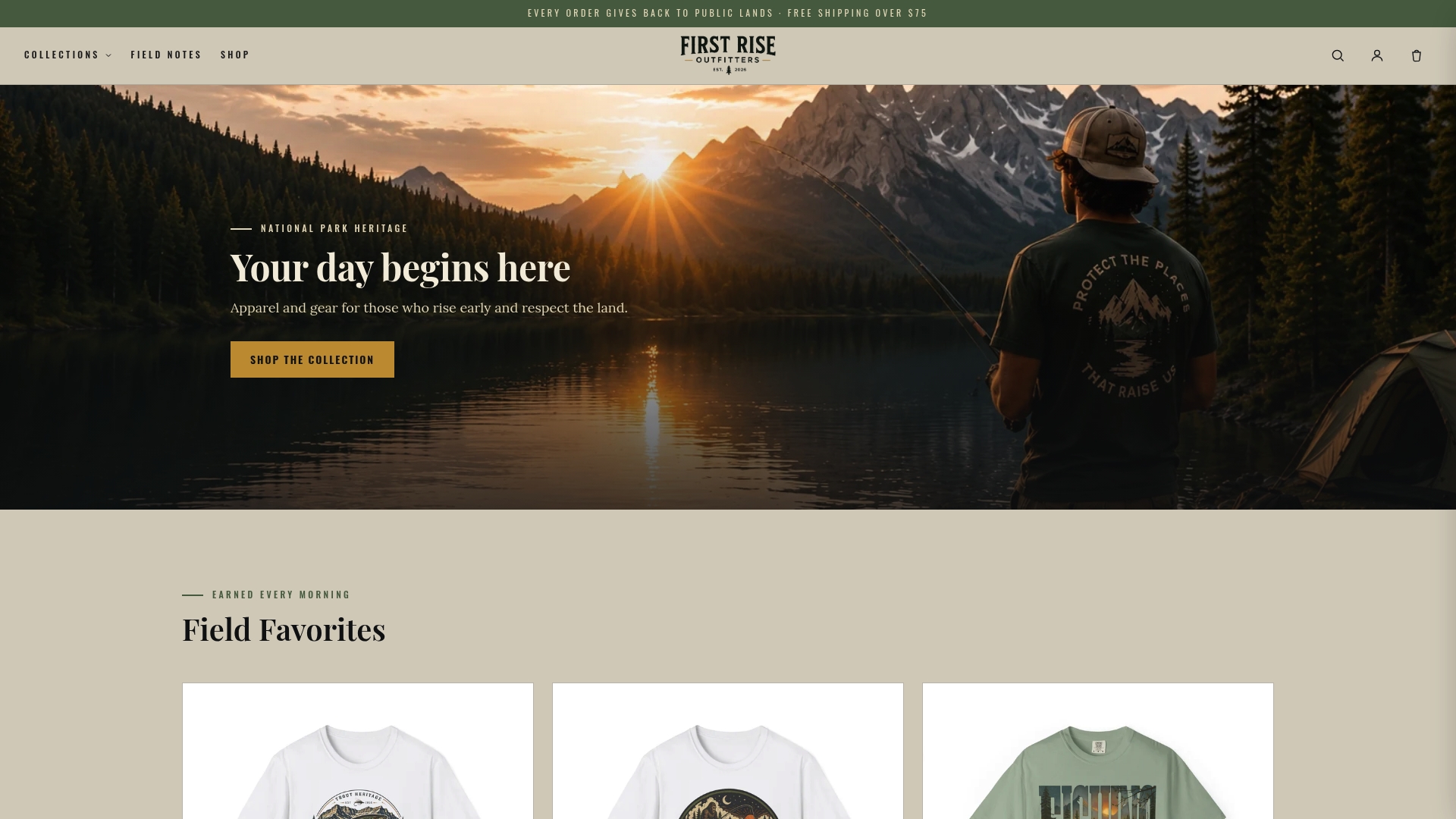
The Brook Trout tee and the Cutthroat Trout Anatomy tee on a Bella+Canvas 3001 are two of the strongest fits for the outfit formulas here. The Yellowstone River Co. tee works well for the spring/fall formula when you want a park-inspired look. Wash all of them inside out in cold water to keep the garment dye and print looking sharp through the season.
Browse the full collection at Firstriseoutfitters and find the tee that fits your water.
Sources
- What To Wear Ice Fishing In Canada (2026) | Canada Fishing Licence
- What to Wear Ice Fishing: A Complete Guide to Staying Warm and Safe - FishUSA
- The Ultimate Guide to Dressing for Ice Fishing: A Layering System for All-Day Warmth
- Fishing Apparel Tech Guide: Fabric, Fit & Performance - Beyond Braid
- Winter Fishing Gear Guide: Staying Dry on the Water – frogg toggs