
Cold Morning Fishing Layers: Quick Outfits and Fixes
By Bobby Harris — Navy FMF Corpsman (2002–2010), founder of First Rise Outfitters
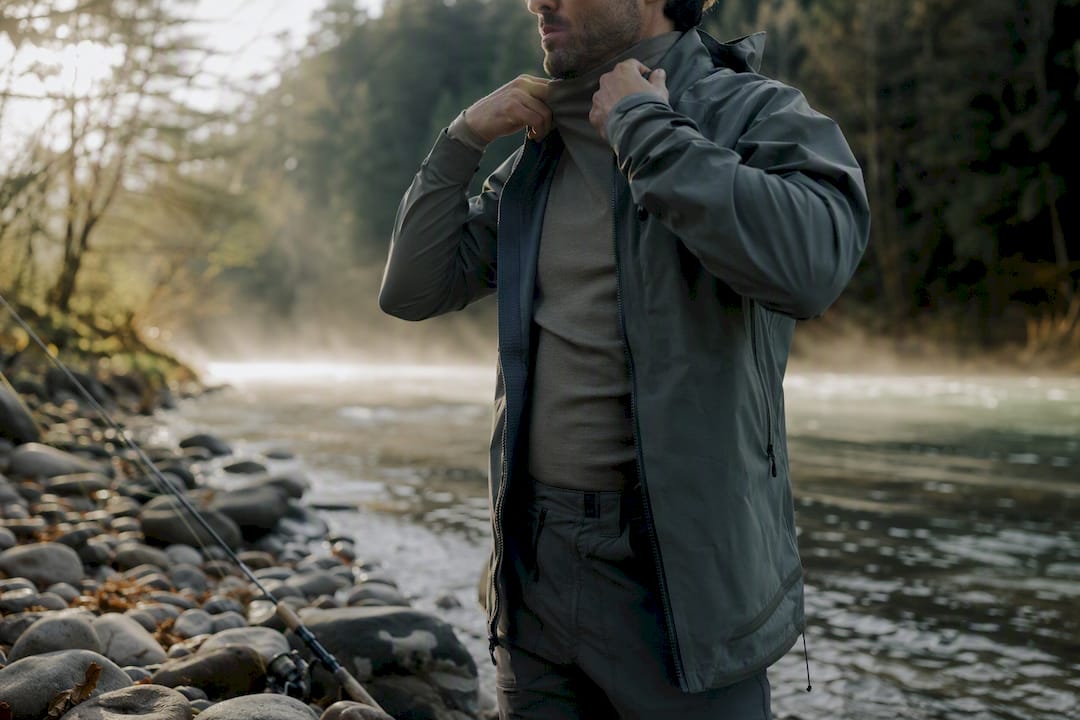
Here’s the fastest system that works: a moisture-wicking base layer, a fleece or synthetic mid layer, an insulated vest or light puffy, and a breathable waterproof shell topped off with a wool hat, gloves, and wool socks. That combination handles most dawn trips in the 30 to 45°F range without leaving you soaked in your own sweat by 8 AM.
Here’s what that looks like on your body before you leave the truck:
- Base: midweight merino wool top and bottom
- Mid: 100 weight fleece or a synthetic-fill vest
- Shell: breathable waterproof rain jacket, unzipped at the collar
- Extremities: wool beanie, midweight gloves, wool socks over a thin liner
If the forecast says wind over 15 mph or temps under 30°F, swap the vest for a full insulated jacket and add a neck gaiter before you launch, not after you’re already cold.
Key Takeaways
Cold-morning layering works when a moisture-wicking base, an activity-matched mid layer, and a breathable waterproof shell combine with a plan to vent before you strip.
| Point | Details |
|---|---|
| Skip cotton entirely | Wet cotton conducts heat away from skin fast; use merino wool or synthetic blends instead. |
| Match mid layer to activity | Choose a vest for mobility while boating or wading, a full jacket for stationary sessions. |
| Vent before you strip | Use pit zips or a half-unzipped shell to release heat instead of removing a full layer. |
| Remove mid layers once air temperatures reach a moderate level depending on your activity | Shed insulation as the air temperature climbs above chilly levels, adjusting for your activity level. |
| Start with a solid base shirt | Firstriseoutfitters’ garment-dyed tees work as a base or light mid layer on milder cold mornings. |
Table of Contents
- What Fabric Should Your Base Layer Be?
- Should You Wear a Vest or a Jacket for Insulation?
- What Makes a Good Outer Shell for Fishing?
- How Do You Keep Your Head, Hands, and Feet Warm?
- What Boots Work Best on Cold Mornings?
- How Do You Adjust Layers as You Fish?
- What Do Guides and Gear Reviews Say About Cold-Weather Layering?
- How Do You Stop Sweat From Soaking Your Layers?
- What Should You Wear at Different Temperatures?
- When Should You Add or Remove a Layer?
- How Do You Stay Comfortable as the Morning Changes?
- How Do You Manage Layers Without Losing Gear?
- Why Layered Clothing Matters for the First Rise
- Dress for Dawn, Then Let the Day Warm You
- Frequently Asked Questions
- Sources
What Fabric Should Your Base Layer Be?
Your base layer’s whole job is moving sweat off your skin before it turns into a cold, clammy film. Once that happens, you’re not fighting the morning air anymore, you’re fighting your own body heat leaving through wet fabric.
Merino wool and synthetic blends (polyester or nylon) both do this well, and the choice mostly comes down to personal preference and trip length. Merino resists odor better on multi-day trips and still insulates when damp. Synthetics dry faster and cost less, which matters if you’re stocking up on more than one set.
For a dawn session in the 30s or 40s, a midweight base works better than lightweight. Fit matters here: snug enough to sit against your skin and do its job, but not so tight it restricts your cast.
- Merino wool: warm when wet, naturally odor-resistant, pricier
- Synthetic blends: dries fast, budget-friendly, needs washing sooner
- Avoid cotton entirely, including cotton socks and long underwear, since wet cotton conducts heat away from the body faster than almost anything else you’d wear
Pro Tip: Toss a spare base layer top and a dry pair of socks in a dry bag. If you sweat through your first layer on the boat ride out, a mid-morning swap changes the entire rest of your trip.
Should You Wear a Vest or a Jacket for Insulation?
Your mid layer’s job is trapping the warm air your body generates, and it only works if the base layer underneath has already moved the moisture out of the way. Wet insulation is useless insulation.
Fleece, synthetic-fill jackets, and down all trap heat differently. Fleece keeps insulating even when it gets damp and dries out fast, which makes it the safer pick for anyone casting near spray or drizzle. Down packs smaller and feels warmer ounce for ounce, but it collapses and stops working once it’s wet, unless it carries a hydrophobic treatment.
The vest versus jacket decision comes down to how much you’ll move. Guides who spend the morning setting anchors, rowing, and working rods tend to reach for vests because they trap core heat without binding the shoulders. Anglers holding a rod tip on a bank or ice hole all morning usually want the full jacket instead.
- Stationary fishing (ice, indicator nymphing, bank sitting): full insulated jacket or heavier fleece
- Active fishing (boat work, wading, walking spots): insulated vest with a lighter fleece underneath
Pro Tip: Size your mid layer to your shell, not the other way around. A shell that’s too snug over a puffy vest compresses the insulation and kills its warmth.
What Makes a Good Outer Shell for Fishing?
The shell’s only two jobs are blocking wind and precipitation while letting body vapor escape. Miss on the second job and you’ll feel wet from sweat even on a bluebird morning with zero rain.
A shell with poor breathability traps sweat vapor against your mid layer no matter how waterproof the outside stays, which is exactly the “soaked from the inside” problem anglers complain about. Look for a breathability rating alongside the waterproof rating, not just one or the other.
- Pit zips for quick venting without removing the whole shell
- Adjustable cuffs and hood to seal out wind gusts
- Taped or sealed seams so water can’t sneak through stitch holes
- A size that fits your mid layer without pinning your arms
Bibs paired with a shorter jacket seal your waist better than a jacket alone, worth considering if you’re wading or kneeling in a boat.
Pro Tip: Unzip the pit zips before you start sweating, not after. Venting early is faster than stripping a layer mid-cast.
How Do You Keep Your Head, Hands, and Feet Warm?
Your extremities lose heat faster than your torso because they have more surface area relative to their size and less muscle mass generating warmth. A warm core with cold hands still ends your morning early once you can’t feel the reel.
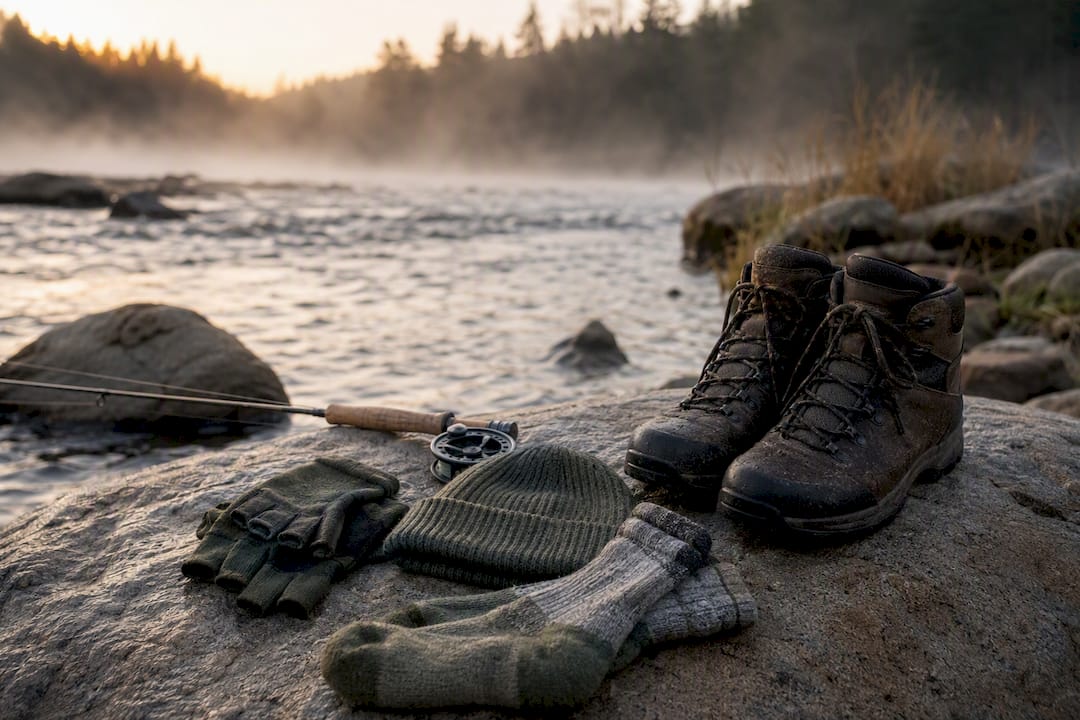
A merino wool beanie or a balaclava covers the biggest single heat-loss point on your body, your head. A neck gaiter closes the gap between collar and chin that wind loves to find.
Gloves come down to how much dexterity you need. Convertible mitten-glove hybrids and fingerless gloves with fold-back tips let you tie knots without going bare-handed; fully insulated gloves with touchscreen fingertips trade some dexterity for more warmth.
- Liner sock plus a wool outer sock beats one thick sock alone
- Pack a spare pair of socks even on short trips
- Chemical foot warmers help on the coldest mornings when boots alone won’t cut it
Pro Tip: Carry a lightweight liner glove even if you plan to fish bare-handed. Slip it on between casts to keep blood flowing to your fingers.
What Boots Work Best on Cold Mornings?
Wet feet or a slip on a mossy bank ends a morning faster than any other gear failure. Waterproof wading boots handle standing water; breathable versions work better if you’re hiking a long approach and want less sweat buildup inside.
A two-sock system, thin liner plus insulated wool sock, beats relying on a single thick pair, since it manages moisture instead of just adding bulk. Rubber soles grip better on smooth rock; studded soles matter more on algae-covered ledges or icy boat ramps.
- Waterproof boots: standing water, boat launches, minimal walking
- Breathable boots: long hikes to the spot, less internal sweat buildup
- Studded soles: slick rock, ice, algae-covered banks
Pro Tip: Store boots somewhere they can fully dry between trips. Damp boot liners lose insulating power fast, even if they look dry on the outside.
How Do You Adjust Layers as You Fish?
Here’s the one-sentence version: add layers before you’re cold and vent before you’re sweating, because catching up on either one is much harder than staying ahead of it.
- At launch, wear the full system, base, mid, shell, hat, gloves, since boat rides and wind chill hit hardest when you’re not moving yet.
- On arrival, unzip pit zips or crack the shell’s collar as soon as you start casting and your body heat climbs.
- Mid-morning, pull the mid layer if the sun’s up and you’re working hard, but keep the shell handy in case wind picks up.
- If temps swing again near dusk or a front moves in, layer back up in reverse order.
If your hands start shaking, your speech slows, or you feel unusually tired for no reason, those are early hypothermia warning signs, not just “a cold morning.” Keep a dry base layer and shell accessible in a dry bag at all times, not buried at the bottom of your gear.
What Do Guides and Gear Reviews Say About Cold-Weather Layering?
Guide culture backs up the activity-based approach: match insulation to how much you’ll move, not just the thermometer. Boat-based Alaskan guides lean on insulated vests specifically because rowing and anchoring all morning demands shoulder mobility that a bulky jacket takes away.
Gear-focused write-ups point to a few upgrades that punch above their weight for extreme cold. Heated socks, fleece-lined deck boots, and convertible gloves show up repeatedly as high-impact comfort multipliers for anglers planning long, cold sessions rather than a quick dawn window.
- Match insulation weight to expected stationary time, not the forecast alone
- Heated socks solve the “cold feet end the trip early” problem better than an extra pair of regular socks
- Fleece-lined boots add warmth without the bulk of a second sock layer
The rule that ties it together: pack more insulation than you think you need, then let activity level decide what actually goes on your body.
How Do You Stop Sweat From Soaking Your Layers?
Moisture management is really the whole game behind cold-morning layering. Every fabric choice, every zipper, every vent exists to solve one problem: keeping sweat from turning into a cold, wet layer against your skin once you stop moving or the wind picks up.
It starts at the base layer. Merino and synthetic fabrics pull moisture away from your skin through capillary action, spreading it across a larger surface area where it can evaporate. Cotton does the opposite, it holds water against your skin and stays wet for hours, which is exactly why it stays banned from cold-weather kits regardless of budget.
The middle of the sweat problem happens at your mid layer. If you’re generating more heat than your mid layer can vent, moisture gets trapped between it and your shell, even if your base layer did its job. That’s your signal to vent, not strip. Pit zips, a half-unzipped shell, or pulling back a hood all let vapor escape without exposing your whole torso to wind chill.
Watch for the warning signs before they become a problem: clammy skin under your mid layer, fogging inside your shell’s hood, or a base layer that feels cold rather than warm-and-damp. Any of those means you waited too long to vent. The fix is almost always faster than people expect, a few seconds with a zipper pull beats five minutes of shivering after you finally cool down.
At the end of a session, hang your base layer to dry rather than balling it into a bag. Damp gear packed away wet stays wet, and you’ll start your next cold morning with a base layer that’s already working against you.
What Should You Wear at Different Temperatures?
Not every cold morning is the same cold morning, and dressing for 40°F like it’s 25°F means overheating by 9 AM.
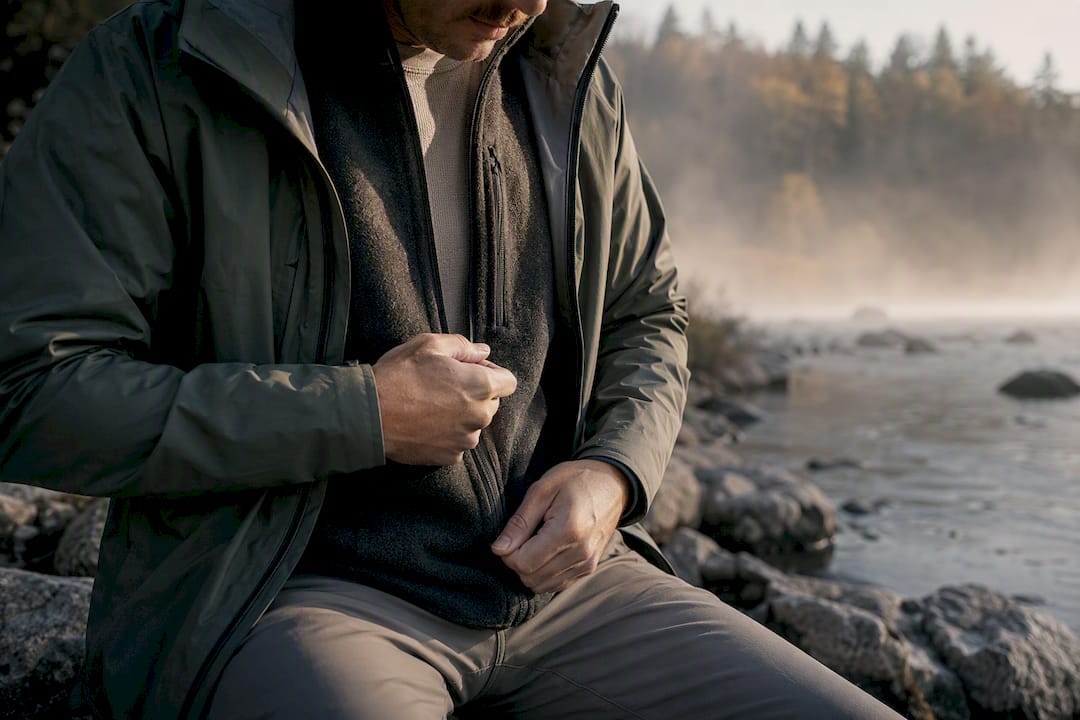
30 to 40°F, calm conditions: Midweight base, 100 weight fleece, insulated vest, breathable shell left unzipped at first. Wool beanie and midweight gloves round it out. This is your workhorse setup for most fall and early spring dawns.
Below 30°F or windy mornings: Swap the vest for a full insulated jacket or add a second thin fleece underneath it. Add a neck gaiter and switch to insulated gloves rather than midweight ones. Wading boots need the thicker sock system here, not just a heavier boot.
40 to 50°F, expecting the day to warm up fast: Lightweight base layer, thin fleece or vest, and a packable shell rather than a heavy one. Skip the beanie for a ball cap and light gloves you can stash in a pocket once your hands warm up.
50°F and climbing through the morning: Start in just a base layer and light mid layer, shell stowed in your bag rather than on your back. This is where a well-made shirt earns its keep, something with enough weight to block the early chill but no bulk to shed once the sun clears the ridge.
Check the wind forecast as closely as the temperature number. A 40°F morning with 20 mph gusts feels closer to 30°F once you factor in wind chill, and that’s the difference between a vest and a full jacket in your bag.
When Should You Add or Remove a Layer?
A few simple rules cover almost every layering decision you’ll make on the water, so you’re not standing there guessing while fish start rising.
Add a layer before you’re cold, not after. Once you’re shivering, you’re already behind, and it takes longer to warm back up than it would have taken to zip up five minutes earlier.
Vent before you strip. Pit zips, a half-unzipped shell, or pushed-up sleeves solve most overheating problems without exposing you to wind chill the way pulling off a whole layer does.
Remove the mid layer once you’re moving steadily and staying warm without it. Air temperatures climbing into the 60 to 65°F range are usually the trigger point for shedding mid layers entirely, though active anglers might hit that point a few degrees earlier than someone standing still.
Keep the shell on standby even after you’ve stripped everything else. Wind and cloud cover can undo an hour of warming in minutes, and having the shell stowed rather than left in the truck means you’re never caught out.
Reverse the order as the day cools again. Shell first if wind picks up, mid layer back on once the temperature actually drops, base layer stays put the whole time doing its job in the background.
The pattern underneath all of this: you’re managing heat output, not just outside temperature. A hard paddle to your spot generates more warmth than standing still ever will, and your layers should respond to that, not just the number on a weather app.
How Do You Stay Comfortable as the Morning Changes?
Dawn conditions shift faster than most anglers plan for. The 34°F air at first light rarely matches the 52°F you’ll feel once the sun clears the treeline, and the anglers who stay comfortable the whole session are the ones who planned for that swing before they left the truck.
Layer for the coldest ten minutes of your trip, not the average. That’s almost always right at launch, whether you’re standing on a dock waiting on a buddy or idling out to your spot. Once you’re moving and fishing, your body starts generating its own heat, and that’s when venting or shedding a layer keeps you from overheating.
Watch your hands and feet more closely than your torso. They’re the first place you’ll notice you’re getting cold, and by the time your core feels it, you’ve usually let it go too long. A quick glove swap or a stomp to get blood moving in your boots handles most of this before it becomes a real problem.
Keep a dry layer accessible the entire morning, not packed at the bottom of a bag you won’t reach until lunch. Spray off the bow, an unexpected dunk, or just heavier sweat than you planned for can all turn a fine morning into a miserable one if your only backup is buried under tackle boxes.
Finally, don’t fight the forecast alone. Check wind speed as closely as temperature, since a breezy 45°F morning behaves like a calm 35°F one once wind chill factors in. Adjust your starting layers accordingly rather than learning that lesson an hour into your trip.
How Do You Manage Layers Without Losing Gear?
Good layer management isn’t just about what you wear, it’s about what you can quickly add, remove, and find again without digging through a boat bag while fish are rising.
Venting features matter more than most anglers realize when picking gear. Quarter-zip or full-zip mid layers let you dump heat without fully removing the piece, which matters when you’re wading and don’t want to strip down waist-deep in a river. Pit zips on your shell do the same job for your upper body.
- Choose mid layers with at least a quarter-zip for quick venting
- Store removed layers in a dry bag, not loose in a boat or vest pocket
- Keep a mental spot, same pocket every time, for gloves you take off to tie knots
- Stuff a packable shell into its own hood pocket so it’s never buried under tackle
Stowage planning matters as much as the gear choice itself. An angler who packs a great mid layer but leaves it in the truck because there was nowhere convenient to stash it once removed hasn’t actually solved the layering problem. Build your system around pieces you’ll actually use mid-trip, not just pieces that look good on paper.
Why Layered Clothing Matters for the First Rise
Layering right means you’re still out there when the bite turns on, not packing up cold and defeated an hour too early. That extra hour is the whole point.
Dress for Dawn, Then Let the Day Warm You
Getting the layering system right means the shirt underneath it matters too, since it’s the piece touching your skin the longest on a cold morning. Firstriseoutfitters builds its garment-dyed tees on heavier Comfort Colors blanks that hold up as a solid base or light mid layer once the sun starts doing some of the work for you, without the loud branding or synthetic feel of typical technical gear.
If you’re rebuilding your cold-morning kit this season, start with a shirt that can pull double duty as your base on milder mornings and your under layer on the coldest ones. The Rocky Mountain Fishing Shirt and the Cutthroat Trout Anatomy Tee both work well tucked under a fleece for a dawn launch, then shed the fleece once the day warms up and they hold their own. Browse the full lineup and find the one that fits your water.
Frequently Asked Questions
What are the best cold morning fishing layers to start with? A moisture-wicking merino or synthetic base, a fleece or insulated vest mid layer, and a breathable waterproof shell cover most dawn trips between 30 and 45°F.
Is down or synthetic insulation better for fishing in the cold? Synthetic and fleece mid layers keep insulating when they get damp and dry faster, making them the safer pick near water spray, while down packs smaller but fails once wet unless treated.
How do I stop sweating through my layers while fishing? Vent early with pit zips or an unzipped collar rather than waiting until you’re already damp, and skip cotton anywhere in your system since it holds moisture against your skin.
When should I remove a mid layer during a cold morning trip? Most anglers shed mid layers once air temperature climbs into the 60 to 65°F range, though active anglers moving around the boat may go a few degrees earlier.
Do I need special gloves for cold weather fishing? Convertible or fingerless gloves preserve the dexterity you need for knots and lures, while fully insulated gloves trade some dexterity for more warmth on the coldest mornings.
Sources
- # Top Cold-Weather Fishing Gear To Keep You On The Water
- How to Layer Rain Gear for Cold-Weather Fishing Without Overheating – WindRider