
Fishing Outfit Ideas for Women: Stylish and Functional Looks
By Bobby Harris — Navy FMF Corpsman (2002–2010), founder of First Rise Outfitters
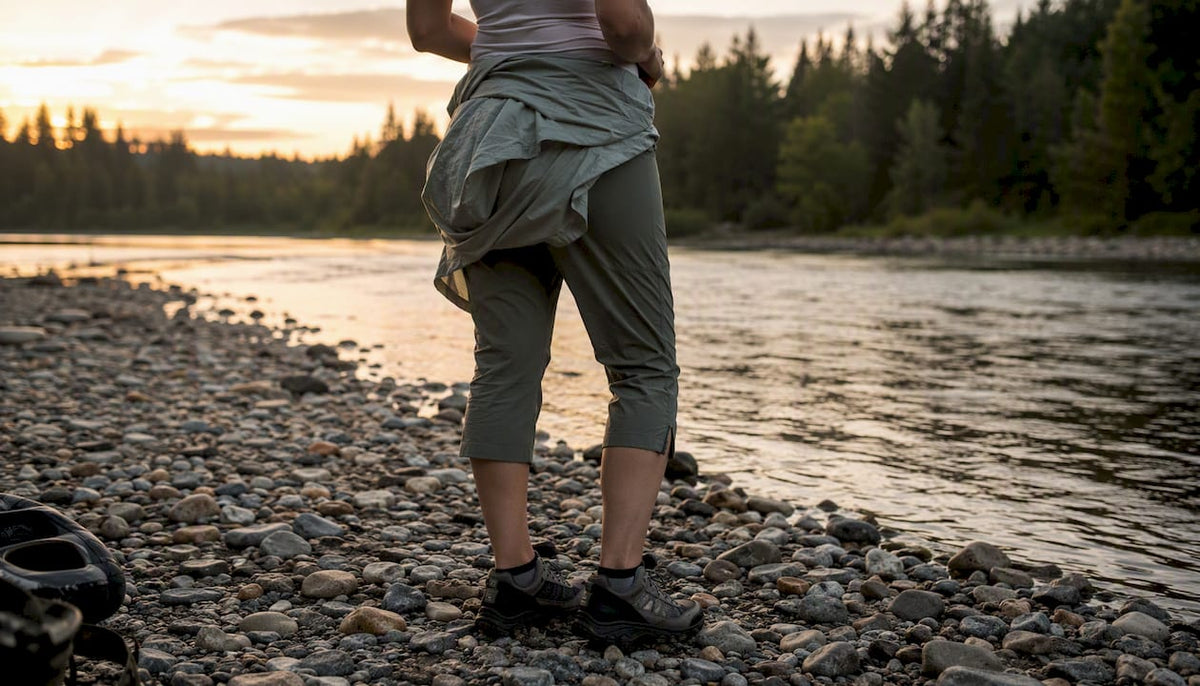
The single most versatile fishing outfit formula for women is a UPF performance top + quick-dry shorts or pants + non-slip deck shoes + wide-brim hat. That combination handles the majority of day trips, from a calm lake morning to a breezy boat ride, and you can dress it up or down with one small accent piece. Here are five rapid formulas to match your plan:
- Hot, sunny day trip: UPF long-sleeve casting shirt + quick-dry shorts + deck sneakers + bucket hat + polarized sunglasses
- Wading a river or stream: Moisture-wicking baselayer + breathable chest waders + high-traction wading boots + sun gaiter
- Cold early morning on the boat: Synthetic baselayer + fleece midlayer + packable waterproof shell + closed-toe deck shoes + beanie or cap
- Casual lakeside afternoon: Garment-dyed graphic tee + quick-dry capris + water-friendly sandals or sneakers + baseball cap
- Fishing date or social outing: Fitted muted tee + tailored quick-dry shorts + clean deck sneakers + low-profile sun hat
Each formula is a starting point, not a rulebook. Swap pieces based on weather, water type, and how long you’ll be out.
Key Takeaways
A UPF performance top, quick-dry bottoms, environment-matched footwear, and a packable outer layer cover the vast majority of fishing trips for women, with small style accents doing the rest of the work.
| Point | Details |
|---|---|
| Cheat-code outfit formula | UPF top + quick-dry bottoms + non-slip footwear + wide-brim hat handles most day trips. |
| Layers over single pieces | A moisture-wicking base, breathable mid, and waterproof outer give you flexibility from dawn to midday. |
| Match footwear to environment | Non-marking rubber soles for boats; high-traction wading boots for rocky streams and shorelines. |
| Color by condition | Light colors for hot sunny days; muted earth tones for river and wading stealth. |
| Firstriseoutfitters tees | Garment-dyed in muted, river-inspired tones, they layer into functional outfits as a base or casual anchor. |
Table of Contents
- What are the core principles behind great fishing outfit ideas for women?
- How do you pick the right tops and sun-protective shirts?
- What jackets and outer layers should you bring on the water?
- Which bottoms work best for boat, shore, and wading trips?
- What footwear is safest and most comfortable for fishing?
- Which accessories actually make a difference on the water?
- Eight ready-made outfit ideas for women anglers
- What should you wear for fly fishing, boat trips, and shore fishing?
- How do you dress up for a fishing date without losing function?
- How do color and pattern choices affect your fishing outfit?
- What goes in your packing checklist, and how do you care for fishing apparel?
- How do Firstriseoutfitters tees fit into a functional angler’s wardrobe?
- Firstriseoutfitters tees that pair with every outfit formula
- Sources
What are the core principles behind great fishing outfit ideas for women?
Layers, synthetic fabrics, and a non-restrictive fit are the foundation of every solid fishing outfit, regardless of where you’re headed. Get those three things right and the rest is styling.
The three-layer approach works like this: a moisture-wicking base layer pulls sweat away from your skin, a breathable mid-layer adds warmth or sun protection, and a waterproof or windproof outer layer shields you from spray and wind. You won’t always need all three, but having them available means you’re ready for the 6 AM chill and the noon sun on the same trip.
Fabric matters more than most people expect. Cotton feels comfortable at home, but on the water it holds moisture and stays wet, which leads to chafing on long days and a dangerous chill if temperatures drop. Synthetic fabrics like polyester and nylon wick moisture and dry quickly. Nylon tends to be more abrasion-resistant, which is useful for wading through brush. Polyester blends are usually lighter and more packable.
For fit, you want full range of motion through the shoulders and arms for casting, a secure waist that won’t shift when you’re climbing in and out of a boat, and ankle or hem choices that won’t snag on tackle or cleats.
Pro Tip: Look for UPF ratings on the label, not just “sun-protective” marketing language. A UPF 50+ rating blocks most ultraviolet radiation, while an unrated shirt may offer little more protection than bare skin on a bright day.
- Polyester blends: lightweight, fast-drying, good UPF when tightly woven
- Nylon: durable, abrasion-resistant, slightly heavier but excellent for wading
- Merino wool: naturally odor-resistant and temperature-regulating, slower to dry
- Cotton: comfortable, but avoid it for all-day water trips
How do you pick the right tops and sun-protective shirts?
Prioritize UPF-rated performance tops or lightweight long sleeves for most conditions. They protect your arms and shoulders during the hours when UV exposure is highest, and they dry fast enough that a splash or a sweat-soaked morning won’t ruin the rest of your day.
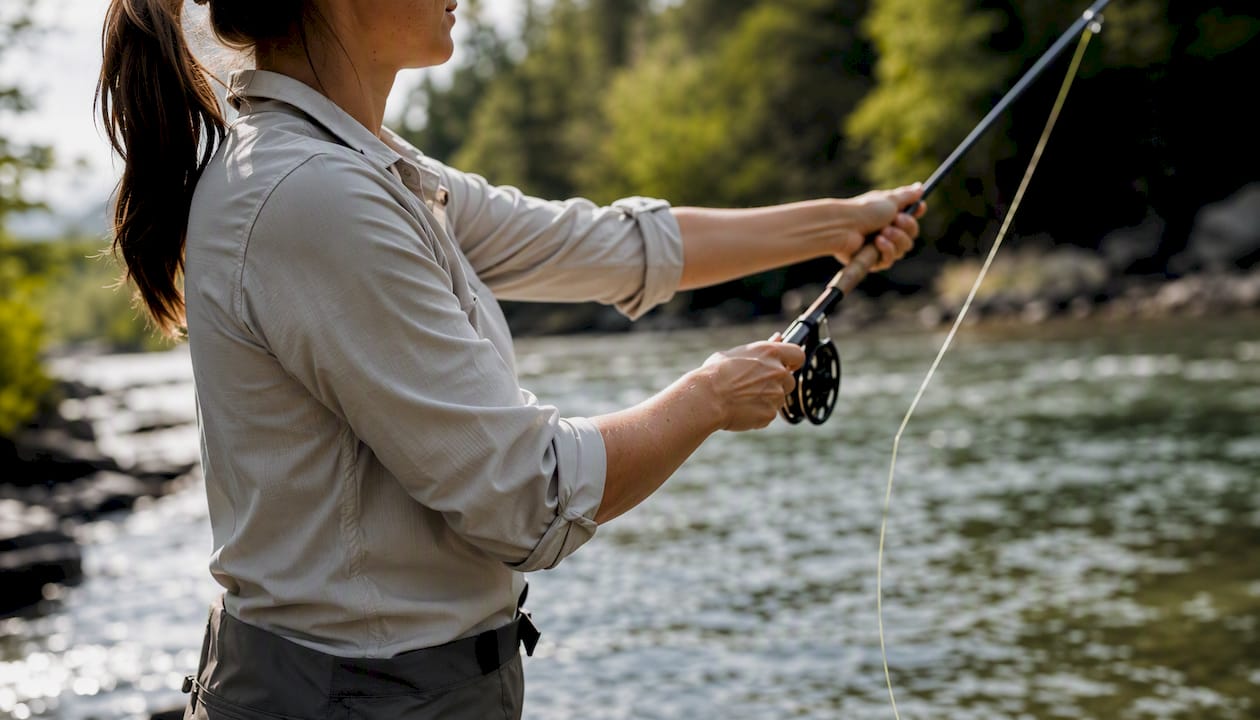
For your baselayer, a fitted moisture-wicking sports bra or swim top is often smarter than a cotton bra under a performance shirt. It stays comfortable when wet and adds a layer of sun protection across the chest. On cooler mornings, a lightweight synthetic long-sleeve baselayer under a button-up casting shirt gives you warmth you can shed as the day heats up.
Casting shirts deserve their own mention. A good one has a collar for neck protection, underarm or back vents for airflow, and a quick-dry finish. Some come with insect-repellent treatments built into the fabric, which is genuinely useful in marshy or wooded areas. Look for a relaxed shoulder and a slightly longer back hem so the shirt stays tucked when you’re reaching forward on a cast.
Styling-wise, cropped performance tops work well for warm days when you’re wearing high-waisted quick-dry shorts. Full-length shirts are better for wading or any situation where your lower back might be exposed to sun or brush. Breathable mesh panels along the sides or back add airflow without compromising coverage.
- UPF 50+ polyester or nylon top: best all-around choice for sun and moisture management
- Lightweight long-sleeve casting shirt: ideal for full-day trips with collar and vent features
- Sports bra or swim layer: smarter than cotton underneath on warm or wet days
- Merino baselayer: good for cool mornings when you need warmth that doesn’t smell after a long day
Women-specific cuts in modern fishing apparel make a real difference here. A shirt designed for a woman’s shoulder width and torso length moves better during a cast than a unisex shirt you’ve sized down.
What jackets and outer layers should you bring on the water?
Pack a lightweight waterproof shell and a warm midlayer for almost every trip. The shell handles rain and wind; the fleece or synthetic midlayer handles the cold that settles in at dawn or after sunset. Together, they weigh less than a single heavy jacket and give you far more flexibility.
A breathable rain shell is the right call for most fishing situations. Look for taped seams, an adjustable hood that fits over a hat, and pit zips for venting when you’re working hard. Corded hems let you cinch out wind without bulk. One feature that’s easy to overlook: life-jacket compatibility. If you’re on a boat and wearing a PFD over your jacket, a bulky collar or stiff shoulders will make that uncomfortable fast. Slim-profile shells designed for active use tend to fit better under a PFD.
For colder trips, a fleece midlayer under a shell is warmer than a single insulated jacket and packs down smaller. Synthetic insulation (like PrimaLoft) is a better choice than down for fishing because it retains warmth even when damp.
Pro Tip: When layering a fleece under a shell, size the shell one step up from your usual fit. A shell that’s too snug over a midlayer restricts your casting arm and makes the whole system feel stiff. You want to be able to reach forward comfortably without the jacket riding up.
- Breathable waterproof shell: everyday fishing outer layer, works in rain and wind
- Fleece midlayer: warmth for cold mornings, pairs with a shell for full protection
- Synthetic insulated jacket: better than down for wet conditions, good for boat trips in shoulder seasons
- Soft-shell jacket: wind-resistant and stretchy, good for mild days when rain isn’t likely
For pre-dawn trips, check out what to pack before the sun rises for a practical breakdown of cold-start layering.
Which bottoms work best for boat, shore, and wading trips?
Choose quick-dry bottoms or waders that match how much water and sun exposure you’ll face. The wrong choice here is more uncomfortable than almost any other gear mistake.
Shorts are the right call for warm, sunny days on a boat or dock where you’re not wading. Look for quick-dry fabric, a secure waistband, and at least two zippered pockets. Cargo-style shorts with thigh pockets are useful for holding a license, a small tool, or a phone. Avoid anything with metal rivets or hardware that can scratch a boat deck.
Capris and convertible pants are the middle ground. They protect your shins from sun and brush, convert to shorts when it gets hot, and work well for shore fishing where you might be scrambling over rocks. Full-length quick-dry pants are the right choice for cold days, buggy environments, or any situation where you want full leg coverage.
Waders open up a different category entirely. Chest waders give you the most coverage and are standard for fly fishing in streams and rivers. Hip waders work for shallower crossings. Breathable waders (Gore-Tex or similar) are far more comfortable than neoprene for warm-weather wading. Layer a lightweight quick-dry performance shirt and leggings underneath, because waders trap heat quickly and you’ll overheat in cotton or heavy fleece.
Practical features to look for across all bottoms: reinforced seams at the knees and seat, a secure waistband that won’t slip when you’re climbing, and roll-up or zip-off options for versatility.
What footwear is safest and most comfortable for fishing?
Match your footwear to the environment. Non-marking, non-slip rubber soles are the standard for boat decks; high-traction wading boots are the right choice for rocky streams and uneven shorelines. Those two categories cover most situations, and mixing them up is where things get unsafe.
On a boat, you need a sole that grips a wet fiberglass or aluminum deck without leaving black scuff marks. Deck shoes and water sneakers with siped rubber soles are designed for exactly this. Closed-toe styles protect your feet from dropped tackle and hooks. Open sandals and flip-flops feel tempting on a hot day, but they offer no grip on a wet deck and no protection from hooks, which makes them a genuine safety risk in most fishing situations.
For wading, fit is everything. Size your wading boots to accommodate neoprene wading socks, which add about half a size of thickness. Felt soles grip slick rocks well but are restricted in some states due to invasive species concerns, so check your local regulations. Rubber studded soles are a legal and effective alternative. Ankle support matters more than most people realize on uneven stream beds, so look for a boot with a structured cuff rather than a low-profile sneaker style.
Pro Tip: Break in new wading boots at home before a long trip. Wear them around the house with your neoprene socks for an hour or two. Stiff boots on a rocky stream are a recipe for blisters and ankle fatigue.
- Boat/dock: non-marking rubber-soled deck shoes or water sneakers, closed-toe preferred
- Wading streams: high-traction rubber or studded wading boots with ankle support
- Shore/rocky banks: rubber boots or ankle-height wading shoes with drainage ports
- Casual lakeside: water-friendly sandals with a heel strap are acceptable when wading isn’t involved
For a deeper look at hat and sun protection choices that pair with your footwear setup, the fishing ball cap guide covers the full picture.
Which accessories actually make a difference on the water?
Polarized sunglasses, a wide-brim hat or cap with neck protection, and a sun gaiter are the three accessories that change your day the most. Everything else is useful but optional.
Polarized lenses cut surface glare, which makes it dramatically easier to spot fish in shallow or clear water. For freshwater fishing in rivers and lakes, amber or copper-tinted lenses improve contrast in low-light conditions. Gray lenses are better for bright offshore or open-water situations where color accuracy matters more. Wraparound frames keep wind and peripheral light out, which reduces eye fatigue on long days.
Wide-brim hats and sun gaiters protect your face, ears, and neck, which are the areas most exposed during a full day on the water. A gaiter made from UPF-rated fabric pulls up over your nose and chin in seconds and packs into a pocket when you don’t need it. It’s one of the lightest and most effective pieces of sun protection you can carry.
Sun gloves, especially fingerless styles, protect the backs of your hands without sacrificing grip or feel. They’re worth carrying on any trip longer than a few hours.
Pro Tip: If you’re heading out before sunrise or in low-visibility conditions, clip a small personal safety light to your PFD or pack. It’s a simple addition that makes you visible to other boats and is required on some waterways.
- Polarized sunglasses: amber/copper for freshwater, gray for open water
- Wide-brim hat or cap: full brim for maximum coverage, cap for lower-profile comfort
- Sun gaiter or neck buff: UPF-rated, packs flat, protects face and neck
- Fingerless sun gloves: UV protection with full grip
- Personal flotation device (PFD): required on many waterways; choose a slim profile that fits over your outer layer
Eight ready-made outfit ideas for women anglers
These eight combinations are built to be recreated or shopped immediately. Each one lists the components, the best fishing type, and one styling note.
-
Hot-weather lake or reservoir: UPF long-sleeve casting shirt (pale blue or white) + quick-dry shorts + deck sneakers + bucket hat + polarized sunglasses. Why it works: light colors reflect heat; the long sleeve protects your arms without adding warmth. Styling tip: add a colorful gaiter for a pop of personality.
-
Cold early morning on the boat: Synthetic long-sleeve baselayer + fleece pullover + packable waterproof shell + quick-dry pants + closed-toe deck shoes + beanie. Why it works: three layers you can shed as the day warms. Styling tip: choose a shell in a muted olive or navy so the whole outfit reads cohesive.
-
Fly fishing a mountain stream: Moisture-wicking baselayer top + breathable chest waders + high-traction wading boots + sun gaiter + polarized sunglasses. Why it works: breathable waders keep you cool while the gaiter handles sun and wind. Styling tip: earth-toned waders blend with the riverbank and reduce fish disturbance.
-
Wading a warm-weather river: Quick-dry leggings + hip waders + lightweight UPF tee + wading boots + wide-brim hat. Why it works: leggings under hip waders add comfort without overheating. Styling tip: a fitted tee in a muted tone keeps the look clean and functional.
-
Deep-sea or offshore boat trip: Windproof/waterproof shell + moisture-wicking long-sleeve baselayer + quick-dry pants + non-marking closed-toe deck shoes + sun gaiter + polarized sunglasses. Why it works: offshore wind is relentless; the shell and gaiter handle both. Styling tip: keep the color palette dark or navy for a polished, nautical look.
-
Casual lakeside afternoon: Garment-dyed graphic tee + quick-dry capris + water-friendly sneakers + baseball cap. Why it works: low-effort, comfortable, and photo-ready without any specialty gear. Styling tip: a muted, nature-toned tee from Firstriseoutfitters anchors the look without trying too hard.
-
Shore fishing, rocky coastline: Quick-dry full-length pants + ankle-height wading shoes with drainage + UPF long-sleeve top + wide-brim hat + sun gloves. Why it works: full leg coverage protects against rocks and brush; drainage shoes handle wet scrambles. Styling tip: roll the pants to mid-calf when the terrain is dry for a more relaxed look.
-
Fishing date or social outing: Fitted garment-dyed tee + tailored quick-dry shorts + clean deck sneakers + low-profile sun hat. Why it works: one elevated piece (a well-made tee) does the style work while the rest stays functional. Styling tip: keep jewelry minimal and avoid anything that dangles near your line.
What should you wear for fly fishing, boat trips, and shore fishing?
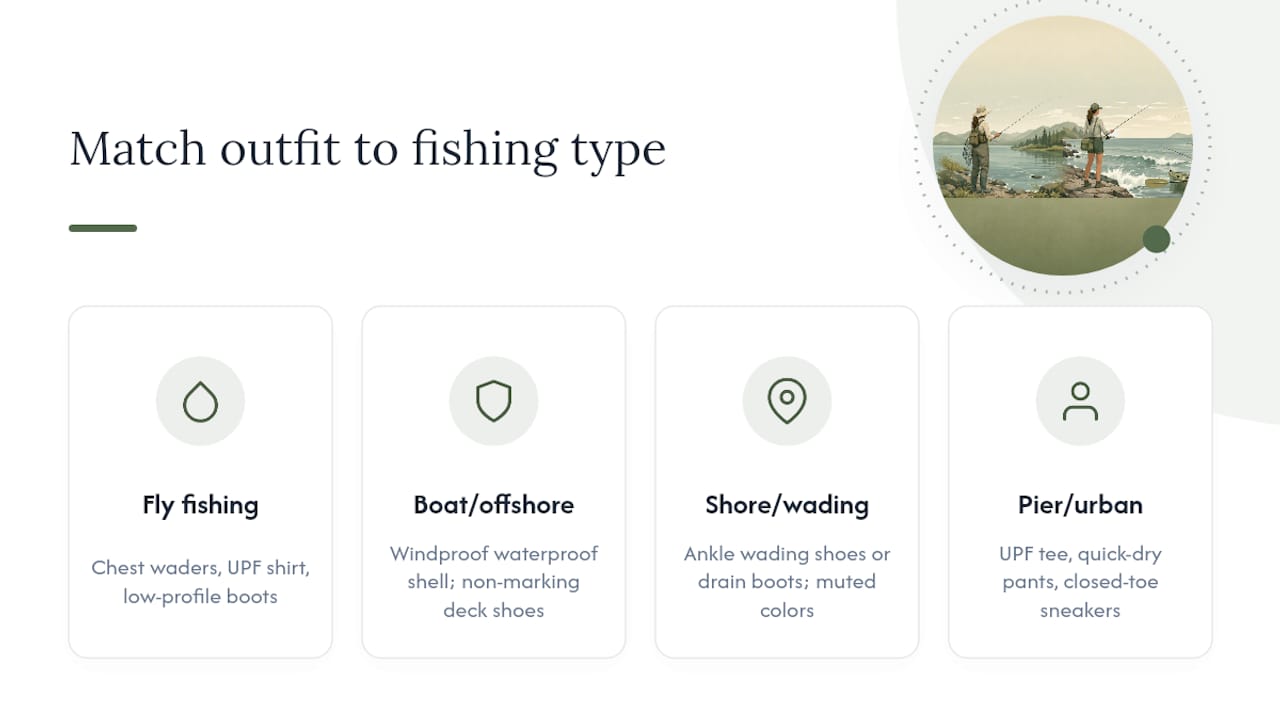
Match the mobility and water exposure demands of your fishing type to your outfit. Fly fishing favors waders and breathable layers; deep-sea fishing favors windproof shells and closed deck shoes; shore fishing sits in between.
Fly fishing: Breathable chest waders are the standard. Fit them over a moisture-wicking baselayer and lightweight leggings, not cotton or denim. A low-profile wading boot with good ankle support keeps you stable on slick rocks. On top, a UPF casting shirt with vents handles the sun and the physical effort of repeated casting. Avoid bulky midlayers that restrict your arm swing.
Boat and deep-sea fishing: Wind is the main challenge offshore. A windproof and waterproof shell over a moisture-wicking long-sleeve top is the core combination. Non-marking, high-traction deck shoes are non-negotiable on a moving boat. Check that your outer layer fits comfortably under a PFD before you leave the dock. For women’s fishing apparel that works across boat and river settings, fit and layering flexibility matter more than any single feature.
Shore and wading: Ankle-height wading shoes or rubber boots with drainage ports handle wet scrambles without soaking your feet. Tonal, muted colors (olive, tan, gray) reduce visual contrast in clear, shallow water, which experienced anglers use to avoid spooking fish. Quick-drain footwear is worth the investment if you’re regularly crossing shallow sections.
Pier and urban fishing: This is where casual style and safety overlap most naturally. A UPF tee or long-sleeve shirt, quick-dry pants or shorts, and a pair of closed-toe sneakers with rubber soles cover most pier situations. Add a cap and sunglasses and you’re set without looking like you raided a specialty gear store.
How do you dress up for a fishing date without losing function?
Aim for one elevated piece while keeping the core function pieces intact. A well-fitted, garment-dyed tee does more style work than you’d expect when it’s paired with tailored quick-dry shorts and clean deck sneakers.
The key is choosing pieces that look intentional rather than thrown together. A muted, nature-toned graphic tee in a flattering cut reads as a style choice, not just a fishing shirt. Pair it with shorts that have a clean hem (no fraying, no cargo pockets overloaded with gear) and sneakers that don’t look like they’ve been through a mud pit.
For jewelry, keep it simple and secure. Stud earrings are fine. Anything that dangles near your line or hands is a snag risk and a distraction. A delicate bracelet is usually okay; a long necklace is not.
Pro Tip: If dockside photos are likely, layer a lightweight utility vest over your tee. It adds structure and a polished look, and the pockets are genuinely useful. Choose one in a neutral tone that complements your tee rather than competing with it.
- Elevated tee + tailored quick-dry shorts + deck sneakers: the cleanest casual-functional combo
- Lightweight wrap or linen-blend layer over a UPF long sleeve: adds femininity without sacrificing sun protection
- Avoid: dangling jewelry, open-toe shoes on a boat, anything that requires dry-cleaning
- Styling small color accents like a bright hat or gaiter keeps the functional base tonal while adding a personal touch
How do color and pattern choices affect your fishing outfit?
Light colors like pale yellow, white, and sky blue reflect heat and are the right call for hot, sunny days. Muted earth tones like olive, tan, and warm gray reduce visual contrast in clear, shallow water, which matters more than most casual anglers realize.
Experienced anglers in river and stream environments tend to wear tonal, muted apparel not just for aesthetics but because high-contrast or bright colors can spook wary fish in shallow or clear water. This isn’t a hard rule for every situation, but it’s worth considering when you’re stalking trout in a clear mountain stream versus trolling offshore where fish visibility is less of a concern.
Bright colors have their place. On a crowded boat or in low-visibility conditions, a bright outer layer or hat makes you easier to spot, which is a genuine safety benefit. For group fishing trips, visibility can matter more than stealth.
Pattern guidance: tonal camo (olive, brown, tan) blends into riverine environments and is a practical choice for wading. High-contrast prints are fine for casual lakeside outings but can work against you in clear-water situations. For camouflage fishing shirt guidance, the tradeoffs between stealth and style are worth understanding before you buy.
Color combinations that photograph well and perform outdoors: olive + cream, navy + tan, warm gray + rust, muted teal + sand.
What goes in your packing checklist, and how do you care for fishing apparel?
Pack by outfit formula: base + mid + outer + footwear + accessories, plus one extra dry layer you don’t plan to use but will be glad you have.
Day trip checklist:
- UPF performance top or casting shirt
- Quick-dry shorts or pants
- Packable waterproof shell
- Deck shoes or wading boots (matched to environment)
- Wide-brim hat or cap
- Polarized sunglasses
- Sun gaiter or neck buff
- Sunscreen for exposed skin
- Extra dry shirt in a dry bag
Wading day additions:
- Chest or hip waders
- Wading boots with appropriate soles
- Neoprene wading socks
- Lightweight leggings or quick-dry baselayer for under waders
- Wading staff if terrain is technical
A small wardrobe of core pieces, including one UPF performance shirt, one lightweight performance shirt, quick-dry shorts, a pair of chest waders, a utility vest, and a warm layer, covers the majority of common angling trips without overpacking.
Garment care: Rinse saltwater off everything as soon as possible after a coastal trip. Salt degrades synthetic fabrics and DWR (durable water repellent) finishes faster than almost anything else. Hang performance fabrics to dry rather than using a dryer; heat breaks down UPF coatings and elastic fibers over time. Wash garment-dyed tees inside out in cold water to slow color fading. Avoid fabric softener on performance fabrics because it clogs the moisture-wicking fibers.
Pro Tip: Store waders hanging upright or loosely rolled, never folded at the knees for long periods. Repeated folding at the same crease point weakens the fabric and eventually causes leaks. A cool, dry storage spot away from direct sunlight extends their life significantly.
How do Firstriseoutfitters tees fit into a functional angler’s wardrobe?
Firstriseoutfitters’ garment-dyed tees are a natural anchor for casual and dawn-era fishing outfits. The muted, river-inspired tones, including warm slate, faded olive, and dusty clay, pair directly with performance layers without clashing. You’re not choosing between style and function; you’re layering one on top of the other.
The badge tee series features hand-designed artwork of brook, brown, rainbow, and cutthroat trout, printed on Comfort Colors blanks. These aren’t loud logo shirts. They read as considered, outdoorsy, and personal, which is exactly the tone you want for a casual lakeside morning or a fishing date where you want to look like yourself rather than a walking gear catalog.
Here’s how the pieces fit into real outfit formulas:
- As a casual base: A brook trout tee over a sports bra or baselayer, paired with quick-dry shorts and deck shoes, is a complete casual lakeside outfit.
- As a layering piece: Wear a badge tee under an open casting shirt for warmth and a style layer that shows at the collar and hem.
- As a statement piece for a fishing date: A fitted garment-dyed tee in a muted tone does the style work without requiring any other elevated piece.
- National Park and river-themed tees: The National Parks fishing tee works as a conversation piece on the water and a casual shirt off it.
The Comfort Colors and Bella+Canvas blanks used by Firstriseoutfitters are heavier and softer than typical performance tees, which makes them better for cooler mornings when you want warmth and comfort over moisture-wicking speed. For choosing the right fishing shirt for early starts, the brand’s field notes are worth a read.
What Bobby actually packs for a morning on the water
A dawn trip calls for a short, deliberate kit: the goal is to be warm at 5 AM and comfortable by 9, without hauling a bag that slows you down.
Here’s what goes in the pack: a Firstriseoutfitters garment-dyed tee as the first layer (warm, soft, and worth wearing whether the fish cooperate or not), a UPF long-sleeve casting shirt over the top that can be unbuttoned as the sun climbs, a packable shell clipped to the outside of the bag for wind and unexpected rain, and a pair of deck shoes with rubber soles that work on a wet dock or a gravel bank. Polarized sunglasses and a cap round it out. That’s the whole system, and it fits in a small daypack with room for lunch.
Firstriseoutfitters tees that pair with every outfit formula
Firstriseoutfitters is built for the angler who’s on the water before the sun clears the treeline. The tees aren’t performance gear in the traditional sense; they’re the piece you reach for because they feel right at 5 AM and still look good in the photo at noon. Garment-dyed on Comfort Colors and Bella+Canvas blanks in muted, nature-inspired tones, they slot into every outfit formula in this article as a base layer, a casual anchor, or a style statement.
The Trout Heritage collection covers brook, brown, rainbow, and cutthroat designs in tones that pair naturally with olive pants, quick-dry shorts, and earth-toned outerwear. The Yellowstone River Co. tee is a strong pick for boat days and casual lakeside outings. For fly fishing trips, the Rocky Mountain fishing tee pairs well under a casting shirt or over a baselayer on a cool morning. Browse the full collection and find the tee that fits your water.
Sources
- What to Wear Fishing for Women Anglers in 2026
- 15 Fishing Outfits for Women That Are Stylish and Practical
- What To Wear Fishing Women - Essentials Guide | BoatBlissBlog
- 20+ Fishing Outfit Ideas for a Stylish Day on the Water