
Garment Dyed vs Pigment Dyed: What Brands and Buyers Need to Know
By Bobby Harris — Navy FMF Corpsman (2002–2010), founder of First Rise Outfitters
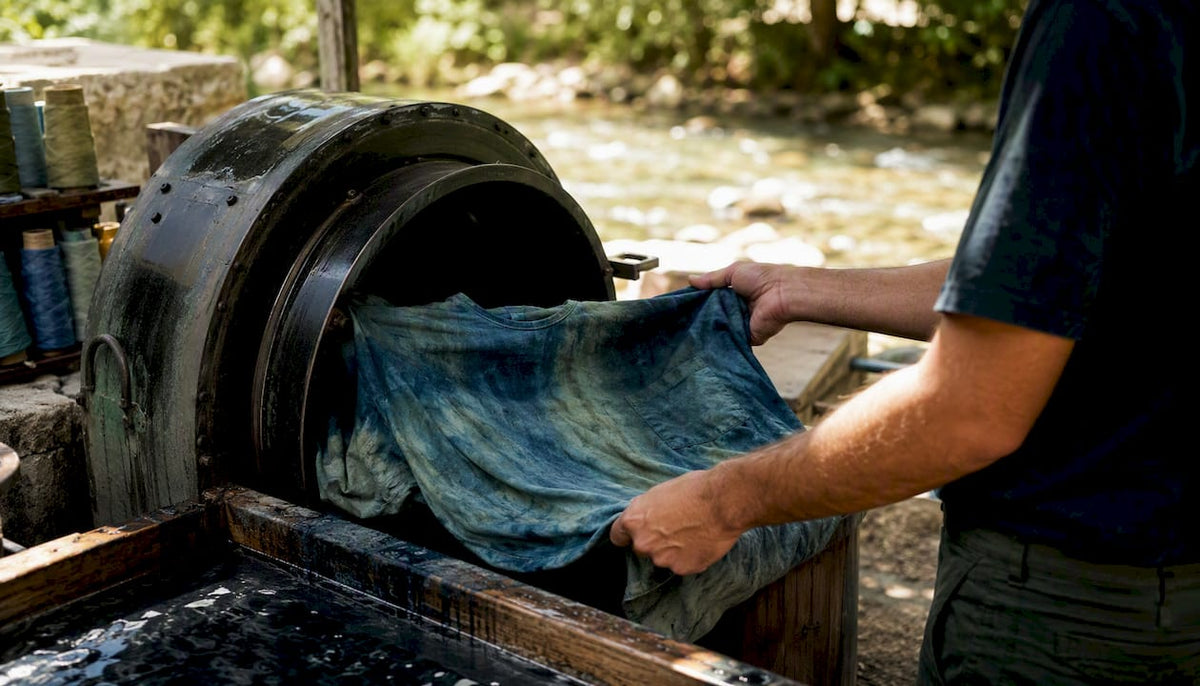
Pigment dyeing coats the fiber surface with insoluble colorants locked in place by binders, giving you that matte, vintage, slightly uneven look. Garment dyeing applies reactive dyes to a fully constructed garment after sewing, bonding color directly to the fiber for deeper, more even saturation and better washfastness. Both terms describe when or how color is applied, and as you’ll see, a garment can actually be both at once.
- Appearance: Pigment dye produces a muted, weathered finish with intentional variation between pieces. Garment dyeing with reactive chemistry delivers richer, more consistent color that holds through repeated washing.
- Durability: Reactive garment-dyed pieces generally outperform pigment-dyed ones on washfastness and crocking resistance, since the dye bonds chemically to the fiber rather than sitting on top of it.
- Resources: Pigment processes use roughly three times less water than some conventional reactive garment-dye methods, a real tradeoff worth weighing.
Whether you’re a brand owner choosing blanks, a screen printer prepping for a run, or a buyer who wants to know what you’re getting, this guide walks through the chemistry, the practical differences, and the decisions that actually matter.
Key Takeaways
Garment-dyed reactive blanks deliver better washfastness and color depth, while pigment dyeing produces the muted, vintage aesthetic that outdoor and lifestyle brands often want, at lower water cost.
| Point | Details |
|---|---|
| Pigment vs reactive chemistry | Pigment sits on the fiber surface; reactive dyes bond covalently, giving deeper color and better washfastness. |
| Vintage look vs lasting color | Choose pigment dyeing for a worn-in aesthetic; choose reactive garment dyeing when color consistency and durability matter. |
| Printing compatibility | Always test-print on the actual blank and confirm pre-wash status with your supplier before decorating. |
| Sustainability tradeoff | Pigment processes use roughly three times less water; garment dyeing reduces dyed fabric scrap versus piece dyeing. |
| Firstriseoutfitters approach | The brand uses garment-dyed Comfort Colors blanks for muted tones, soft hand, and decoration-ready stability on its badge tee line. |
Table of Contents
- Garment dyed vs pigment dyed: side-by-side comparison
- What garment dyeing actually is
- What pigment dyeing actually is
- How they look, feel, and age over time
- Printing and finishing on dyed garments
- How to tell which method was used
- When to choose pigment dyeing vs garment dyeing
- Why Firstriseoutfitters uses garment-dyed Comfort Colors blanks
- Care instructions for pigment-dyed and garment-dyed garments
- Production and environmental considerations
- A practical note on choosing your dye method
- Garment-dyed badge tees built for early mornings
- Sources
Garment dyed vs pigment dyed: side-by-side comparison
Before diving into the chemistry, here’s how the two methods stack up across the dimensions buyers and printers care about most. Note that some blanks, like Comfort Colors, combine garment-dye timing with pigment chemistry to get the best of both, so treat these as general patterns rather than hard rules.
| Dimension | Pigment Dyed | Garment Dyed (Reactive) |
|---|---|---|
| Appearance / aesthetic | Matte, muted, vintage; intentional batch variation | Saturated, even color; consistent shade across a run |
| Handfeel / stiffness | Can feel slightly stiff initially due to binders; softens with washing | Soft drape preserved; mechanical tumbling during dyeing softens seams |
| Colorfastness / wash durability | Lower washfastness; fades and crocks more readily | Superior washfastness; reactive dye bonds covalently to fiber |
| Printability / dye migration risk | Binder layer can affect ink adhesion; vintage aesthetic pairs well with distressed prints | Better long-term print durability; dye migration risk varies by fixation quality |
| Fabric compatibility | Works on most fibers; binder system adapts to synthetics | Best on natural fibers (cotton, linen); reactive dyes require cellulose |
| Production lead time / cost / waste | Faster cure steps; lower water use; less inventory flexibility | Enables late-stage color decisions; reduces dyed fabric scrap |
What garment dyeing actually is
Garment dyeing means the finished, cut-and-sewn garment goes into the dye bath, not the raw fabric. You start with a greige (undyed) or PFD (prepared-for-dyeing) blank, run it through the dye machine after construction, and come out with a piece that has a naturally lived-in look because seams, hems, and stress points absorb color slightly differently than flat panels.
The chemistry behind it depends on the fiber. For cotton and cotton blends, reactive, direct, sulfur, and vat dye classes are all used, with reactive dyes being the workhorse for most quality apparel. Reactive dyes form a covalent bond with cellulose molecules, which is why the color penetrates the fiber rather than sitting on top of it. That bond is what gives reactive garment-dyed pieces their washfastness advantage.
On the production side, garment dyeing happens in paddle machines or rotary drum machines that tumble the garments freely. That mechanical action does something useful: it softens seams and fabric hand in a way that piece-dyed fabric never gets. Brands also love garment dyeing because it lets them hold undyed inventory and make color decisions closer to the selling season, cutting the risk of sitting on the wrong shade.
Pro Tip: Build a shrinkage allowance into your patterns before a garment-dye run. Hot dye baths cause measurable shrinkage, and brands that skip this step end up with finished garments that run small. Always test a first-run sample before committing to production quantities.
Key production considerations:
- Start with PFD blanks or pre-scoured garments to get even dye uptake
- Pre-treat with scouring agents to remove sizing and oils that block dye penetration
- Match dye class to fiber content (reactive for cotton, acid for wool/nylon)
- Account for shrinkage in pattern grading before cutting
What pigment dyeing actually is
Pigment dyeing works differently at a fundamental level. Pigments are insoluble colorant particles with no chemical affinity for textile fibers. They don’t bond to the fiber the way reactive dyes do. Instead, a cationic pre-treatment conditions the fabric surface, and then a polymeric binder system traps the pigment particles on the fiber after curing with heat.
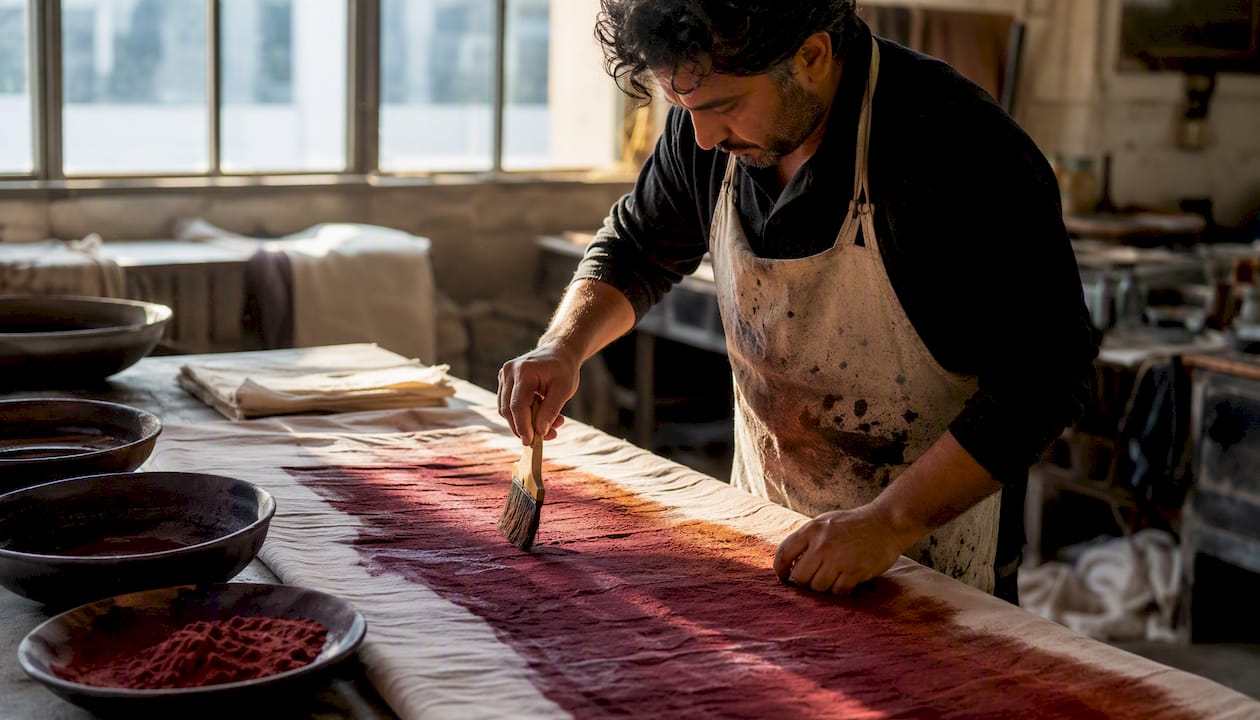
The typical process runs: cationic pre-treatment → pigment application → binder application → heat curing → washing → softening. That final wash and softening step matters more than most buyers realize. Fresh off the curing oven, a pigment-dyed garment can feel noticeably stiffer than a reactive-dyed one. Post-cure washing and enzyme or mechanical softening bring the hand back down to something wearable.
Because the pigment sits on the surface, it abrades at seams and high-friction zones over time. That’s not a defect. For lifestyle and outdoor brands, it’s the whole point. The worn-in look you see on a well-loved flannel or a faded tee? That’s pigment chemistry doing exactly what it was designed to do.
Batch-to-batch variation is also built into the process. Two pigment-dyed shirts in the same colorway from the same supplier may land slightly differently, and that’s considered part of the aesthetic.
Pro Tip: Some suppliers, including Comfort Colors, combine garment-dye timing with pigment chemistry and follow it with commercial washes to achieve both a soft hand and the vintage variation that pigment produces. If you want the look without the initial stiffness, ask your supplier specifically about their post-cure softening program.
What to expect from pigment-dyed garments:
- Matte, muted color with intentional within-piece and batch-to-batch variation
- Initial stiffness that softens after a few washes
- Higher crocking risk, especially in the first few washes
- Works across fiber types since binders adapt to synthetics as well as natural fibers
How they look, feel, and age over time
The visual difference between the two methods is obvious side by side. A pigment-dyed tee looks like it’s already been through a hundred washes on day one. Colors are muted, slightly uneven, and have that chalky, sun-faded quality. A reactive garment-dyed piece looks clean and saturated, with consistent color from seam to seam.
Handfeel follows the same logic. Reactive garment-dyed blanks preserve the natural drape of the fabric, and the tumbling process during dyeing actually improves softness. Pigment-dyed garments can feel slightly boardy right out of the bag because of the binder system, though a few washes fix most of that. Some suppliers add enzyme washes or mechanical softening after curing to speed up the break-in.
Durability is where the chemistry gap shows up most clearly. Reactive dyes bond at the molecular level, so color loss happens gradually and evenly over many washes. Pigment dyes abrade from the surface, which means color loss tends to concentrate at stress points first. That’s the vintage effect in action, but it also means pigment-dyed garments score lower on standard washfastness tests.
Worth knowing: Crocking (color transfer when rubbed) is more common with pigment-dyed garments, particularly in the first few washes. A damp white cloth rubbed against a new pigment-dyed tee will almost always pick up some color.
Shrinkage is another factor to plan for. Because garment dyeing uses hot water baths, brands build shrinkage allowances into their patterns before cutting. If you’re buying garment-dyed blanks off the shelf, check the supplier’s sizing notes and wash the garment once before printing or gifting.
Key aging differences:
- Pigment-dyed: fades at seams and high-wear zones first, deepening the vintage look
- Reactive garment-dyed: fades gradually and evenly, maintaining color integrity longer
- Both methods benefit from cold-water washing and inside-out laundering to slow fading
Printing and finishing on dyed garments
Decoration on dyed garments is where a lot of brands run into trouble, and the dye method is a big part of why.
On pigment-dyed garments, the binder layer on the fiber surface can interfere with ink adhesion, particularly with water-based inks that need to penetrate the fabric. Plastisol inks tend to sit on top of the binder without issue, but the hand of the print can feel heavier on a fabric that already has a coating. The upside is aesthetic: distressed, vintage-style prints look completely at home on pigment-dyed fabric, and the matte base color makes worn-in graphics feel intentional rather than accidental.
Reactive garment-dyed blanks generally offer better long-term print durability, but dye migration is a real risk depending on how well the dye was fixed and whether the garment received a proper post-wash before decoration. Polyester blends are the biggest offenders for migration, but even cotton-rich garments can bleed into lighter inks if fixation was incomplete. Always test prints on the actual blank and ask your supplier about their pre-wash and fixation routines before running a full decoration job.
Pro Tip: For screen printing on either dye type, run a test print, cure it, and wash it three times before approving the production run. Ask your supplier whether the blank has been pre-washed after dyeing. A blank that hasn’t been pre-washed will shrink and potentially bleed after your customer’s first laundry cycle.
Practical printing checklist:
- Use plastisol inks on pigment-dyed garments for reliable adhesion
- Request pre-washed blanks from your supplier before decorating
- Use an underbase layer on dark garment-dyed blanks for vibrant colors
- Test for dye migration on any polyester-blend garment-dyed blank before committing
- Confirm curing temperatures with your ink supplier, especially on binder-coated fabrics
How to tell which method was used
You don’t need a lab to figure out which dye method you’re looking at. A few quick checks get you most of the way there.
Visual checks:
- Look at the inside seams and collar. Pigment-dyed garments often show lighter color at seam allowances and stress points where the binder abraded during finishing. Reactive garment-dyed pieces tend to show more even color penetration, including on the inside of the fabric.
- Check the fabric cross-section at a cut edge. Reactive dyes penetrate the fiber, so the color goes all the way through. Pigment-dyed fabric often shows a lighter core with color concentrated on the surface.
- Look for a slight sheen or stiffness in a new garment. Binder residue can give pigment-dyed fabric a faint surface texture that reactive-dyed fabric doesn’t have.
Tactile and practical checks:
- Rub a damp white cloth firmly against the garment. Significant color transfer (crocking) points to pigment dyeing, especially on a new piece.
- Read the product tag and brand notes. Many brands now specify “garment-dyed” or “pigment-dyed” directly on the label or product page.
Pro Tip: When ordering blanks from a supplier, ask these three questions: Is this PFD or pre-dyed fabric? What dye class was used? Was the garment pre-washed after dyeing? Those answers tell you everything you need to know about decoration compatibility and care requirements.
When to choose pigment dyeing vs garment dyeing
The right choice comes down to what you’re trying to achieve and who you’re making it for.
Choose pigment dyeing when:
- The vintage, worn-in aesthetic is the whole point of the product
- You’re decorating with distressed or faded-style graphics that match the muted base
- You need to work across fiber types, including synthetics
- Lower water use in production is a priority for your brand’s sustainability story
- Batch variation is acceptable or desirable for your customer
Choose garment dyeing (reactive) when:
- You need consistent, saturated color that holds through repeated washing
- Color accuracy matters, such as matching a Pantone reference across a large run
- You’re decorating with bright, detailed prints that require a clean, stable base
- Your customer will wash the garment frequently and expects the color to last
- You want the soft hand and seam-softening that tumble dyeing provides
For most lifestyle and outdoor apparel brands, garment-dyed reactive blanks hit the sweet spot: soft hand, durable color, and a slightly relaxed, lived-in quality that reads as authentic rather than manufactured. For brands specifically chasing the vintage streetwear look, pigment dyeing or a hybrid approach like Comfort Colors delivers that aesthetic out of the box.
Buyer checklist before committing:
- Order a sample in your target colorway and wash it five times
- Test-print your decoration on the sample before approving production
- Ask your supplier for the dye class, fixation method, and whether blanks are pre-washed
- Run a small pilot order before scaling to full production quantities
Why Firstriseoutfitters uses garment-dyed Comfort Colors blanks
Firstriseoutfitters builds its core badge tee line on garment-dyed Comfort Colors blanks, and the reasoning is straightforward. The brand’s hand-designed trout artwork, river-inspired colorways, and conservation messaging need a base that feels like it belongs outdoors, not on a shelf. Garment-dyed Comfort Colors delivers that: the muted, slightly uneven tones read as natural rather than synthetic, and the soft hand from the tumble-dye process means the shirt feels broken-in from the first wear.
The Yellowstone River Co. fishing tee is a good example of how this plays out in practice. The muted mountain tones on a garment-dyed blank let the trout graphic carry the visual weight without competing with a loud base color. The decoration holds well because Comfort Colors pre-washes its blanks after dyeing, which stabilizes the fabric before any ink touches it.
For other small brands considering the same approach:
- Start with Comfort Colors 1717 or a comparable garment-dyed blank in a PFD or pre-washed state
- Choose colorways in the muted, earthy range where garment-dye variation reads as intentional
- Confirm with your decorator that they’ve printed on garment-dyed blanks before and understand the pre-wash requirement
- Order a Comfort Colors sizing sample first, since shrinkage allowances affect fit across the size run
Care instructions for pigment-dyed and garment-dyed garments
Getting the care right extends the life of both dye types significantly, and the instructions differ enough that it’s worth spelling them out separately.
For pigment-dyed garments:
- Wash cold, inside out, on a gentle cycle to slow surface abrasion
- Use a mild, dye-free detergent; avoid bleach or oxidizing agents that break down binders
- Tumble dry low or air dry flat; high heat can degrade binders and accelerate fading
- Avoid ironing directly on the printed or dyed surface; use a pressing cloth if needed
- Wash separately for the first two or three cycles to prevent crocking onto other garments
For reactive garment-dyed garments:
- Wash cold or warm (up to 86°F / 30°C) inside out; hot water accelerates dye release
- A color-safe detergent without optical brighteners preserves the original tone
- Tumble dry low; the fabric can handle more heat than pigment-dyed pieces, but low heat extends color life
- Ironing is generally safe on cotton settings; avoid steam directly on printed areas
Pro Tip: If you’re a retailer or brand shipping garment-dyed pieces, include a care card in the package that specifically mentions washing the shirt inside out and separately for the first wash. New garment-dyed pieces, especially pigment-dyed ones, can transfer color onto packaging or other garments during shipping if humidity is high.
Production and environmental considerations
The sustainability picture between these two methods is more nuanced than most brand marketing suggests, but a few differences are clear.
Water use: Pigment processes use roughly three times less water than some conventional reactive garment-dye methods, according to industry benchmarks. That’s a meaningful gap if water efficiency is part of your brand’s environmental story.
Waste and inventory: Garment dyeing has a structural advantage over piece dyeing on fabric waste. Because garments are dyed after cutting and sewing, brands can hold undyed inventory and make color decisions later. Piece-dyed manufacturing can produce 15%–25% fabric scrap that is already dyed and difficult to repurpose. Garment dyeing sidesteps that problem almost entirely.
Lead time and MOQ: Garment dyeing supports shorter, demand-driven runs because you’re not committing to a fabric color months before production. Pigment processes add curing steps that can affect throughput, though the overall timeline difference is usually small for standard blanks.
Key tradeoffs at a glance:
- Pigment dyeing: lower water use, faster color decisions, but binder chemistry adds finishing steps
- Garment dyeing: more water intensive, but reduces dyed fabric waste and enables late-stage color flexibility
- Both methods benefit from pre-washed blanks that reduce first-wash shrinkage and dye transfer for end customers
A practical note on choosing your dye method
The conventional advice in apparel is to pick a dye method based on aesthetics alone. Vintage look? Pigment. Saturated color? Reactive. But that framing misses the real decision, which is about what your customer experiences six months after they buy the shirt.
If your brand is built around durability and color integrity, reactive garment dyeing is the more honest choice. If your brand is built around a lived-in, outdoor aesthetic where a little fading is part of the story, pigment or a hybrid approach like Comfort Colors is the right call. The mistake is choosing a method for the launch photo and ignoring how it wears.
For small lifestyle brands especially, sampling is non-negotiable. Order the blank, wash it ten times, print on it, wash it ten more times, and then decide. No supplier spec sheet tells you what that shirt looks like after a season of use.
Garment-dyed badge tees built for early mornings
Firstriseoutfitters makes its badge tees on garment-dyed Comfort Colors blanks for exactly the reasons this guide covers: soft hand, muted river tones, and decoration that holds up through a fishing season. The Yellowstone River Co. tee and the Rocky Mountain Fishing Shirt are good starting points if you want to see how garment-dyed blanks perform in a real outdoor apparel context.
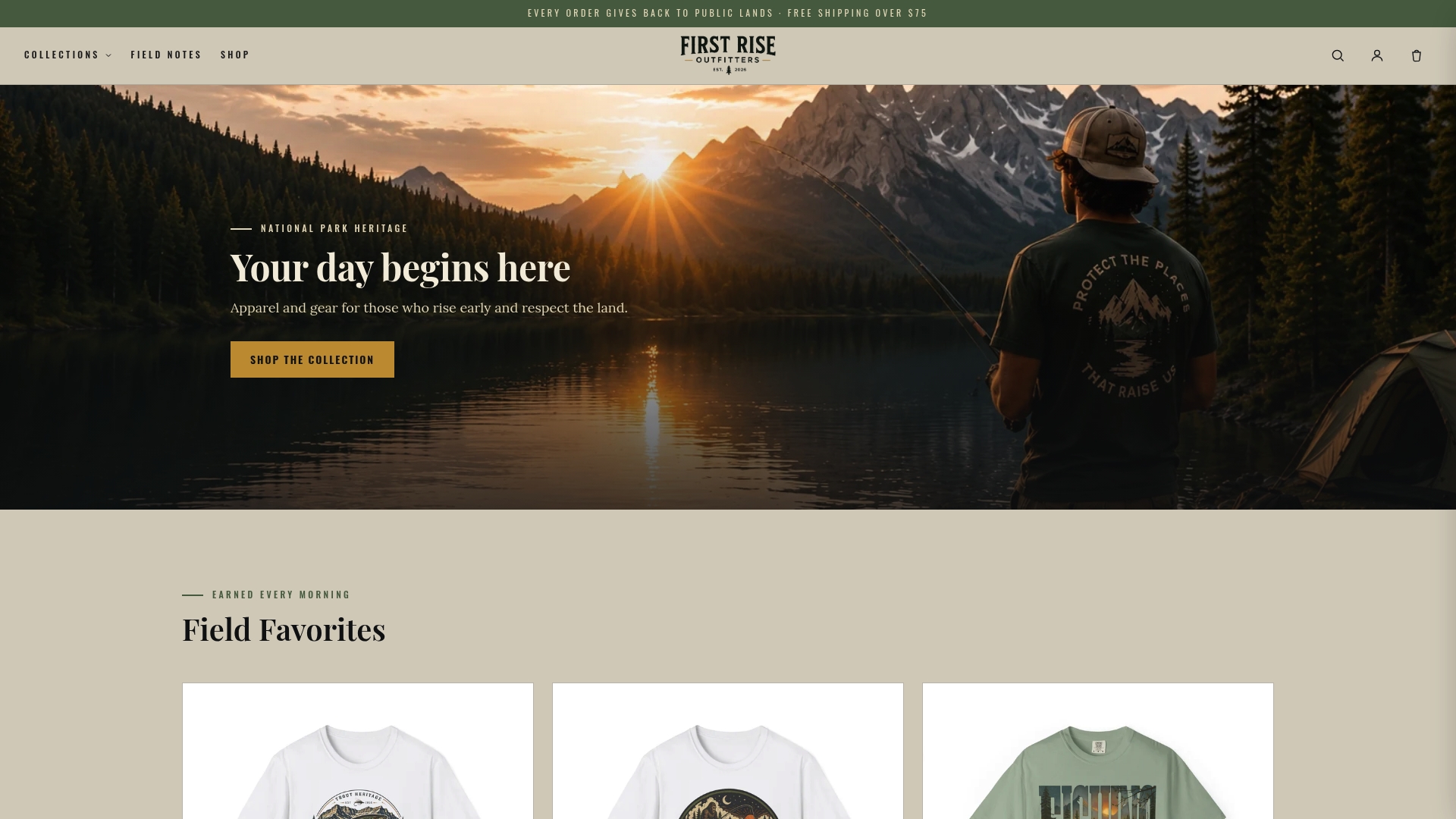
Before you commit to a full run of any dyed blank, order a sample, wash it several times, and test your decoration on it. That’s the same process Firstriseoutfitters follows, and it’s the only way to know how a shirt will actually look on your customer six months from now. Browse the full badge tee collection to see the range of garment-dyed colorways in action.
Sources
- Pigment vs Garment Dyeing: Which Method is Right for You?
- Garment dyeing technology & machineries (TextileEdu)
- TRI-3003 Garment Dyeing of Cotton Apparel (Cotton Incorporated)
- Pigment-Dyed Custom T-Shirts & Sweatshirts: What They Are, How to Customize Them & Care Tips - Custom Ink Blog
- What Is Garment Dyeing? Guide For Brand Owners (2026)
Recommended
- Camouflage Fishing Shirt: What Anglers Need to Know – First Rise Outfitters
- Technical Shirts That Work Hard and Look Good – First Rise Outfitters
- Best Alternatives to Orvis Apparel for Anglers in 2026 – First Rise Outfitters
- Best Duck Camp Alternatives for Anglers Who Rise Early – First Rise Outfitters